

Free Money Offers for Binary Options Trading in South Africa
Explore how free money offers for binary options trading work in South Africa 🇿🇦. Learn to spot risks, understand rules, and use bonuses wisely. 💰📊
Edited By
Sophia L. Draper
60-second binary options stand out as one of the fastest ways to trade, especially if you’re based in South Africa and want quick results. These ultra-short trades require razor-sharp timing and a solid grasp of market conditions. Whether you’re watching the JSE indices, local commodities like gold and platinum, or currency pairs involving the rand, knowing effective strategies can make a real difference in your success.
Trading in just a minute leaves no room for error. Instead of relying on long-term forecasts or slow-moving trends, you need approaches tailored to rapid shifts in price. Traders often underestimate how volatile such short timeframes can be, especially given South Africa’s unique drivers like global commodity price swings and rand fluctuations.

This article zeroes in on practical strategies that work specifically for 60-second binary options. It’ll cover tactical entry points, how to manage risk without getting burned, and tools that can aid your decisions. The goal is to help you trade smartly without getting caught out by the lightning pace.
Remember, speed alone won’t win trades. Precision and clear strategy are your best friends when trading 60-second binaries.
Here’s what you can expect:
Quick methods for identifying when to enter or exit trades
Key indicators suited for rapid market analysis
Risk control techniques that protect your capital
Tools that South African traders find useful, considering data costs and platform availability
Taking just a step back to focus on these factors can help prevent impulsive moves — which often lead to losses. Instead, you’ll be trading with enough control to capitalise on fleeting opportunities while keeping losses manageable.
So, for South African traders eager to tackle 60-second binaries, staying grounded with smart strategies is essential. The rest of this article unfolds the best ways to do just that.
Binary options are contracts where you predict whether an asset’s price will rise or fall within a set period. The 60-second binary option puts this into hyperdrive: your trade lasts just one minute from the moment you enter. Within that minute, you decide if, say, the price of gold or a forex pair like USD/ZAR will be higher or lower when the clock runs out.
This lightning-fast expiry makes 60-second options very different from longer-term alternatives. While longer expiry binary options might last several minutes to hours, 60-second trades demand split-second decisions and offer immediate outcomes. This means traders can fit multiple trades into a short time frame, but it also leaves little room for error or complex analysis.
In simple terms, 60-second binary options are a wager on short-term price movement. You select an asset, predict whether its price will increase (call) or decrease (put) within 60 seconds, then wait to see if you’re right. Winning pays out a fixed amount; losing means you forfeit your stake.
The appeal here is clear: rapid trades give instant feedback. If you guessed wrong, the loss is quick and contained; got it right, and the profit is just as fast. Think of it as a quick sprint instead of a marathon.
Unlike trades set to expire in 5 minutes or longer, 60-second options require you to react to micro-movements in the market. There’s no time for deep technical analysis or fundamental news updates to play out. Instead, success relies heavily on spotting short bursts of momentum or taking advantage of predictable patterns like support and resistance within that brief window.
Also, price volatility can be exaggerated in such tight frames, causing sudden spikes that may unfairly hit stop levels for longer trades but can offer quick wins or losses in these sprint-like plays.
Speed and quick returns are big draws, especially for traders who want immediate gratification without waiting hours or days for a result. For example, a trader in Cape Town might use short breaks between daily routines to place several quick trades, potentially growing a small account incrementally over a day.
On top of that, the fast turnaround suits those who keep a close eye on live market charts and prefer active trading styles. It can be quite electrifying, similar to the buzz during a local rugby match's final minutes.
Challenges and risks involved include the fact that 60-second options magnify market noise. A sudden robot (traffic light) change in price momentum can flip your trade against you within seconds. Emotional impulses can get the better of even experienced traders, leading to overtrading and chasing losses.
Plus, unexpected news events may trigger brief, sharp moves that wipe out positions before you have time to react. Managing risk becomes tougher but all the more critical — setting sensible investment sizes and sticking to a strategy is key here.
Quick trades can feel like a rush, but remember: the faster the play, the sharper the focus you need to avoid costly mistakes.
Understanding these fundamentals helps South African traders approach 60-second binary options with clear eyes, recognising both the potential rewards and pitfalls before they place their first trade.

Trading 60-second binary options requires precision and quick thinking. Because the trades expire so fast, having key strategies up your sleeve is essential. They help you spot good entry points and manage risk without second guessing. For South African traders who often deal with volatility and spreads, mastering these approaches can make the difference between small losses and consistent profits.
Using moving averages is a straightforward way to sense market direction quickly. In such a short timeframe, traders often use very fast moving averages, like the 5-period or 10-period simple moving average (SMA). When the price is above these averages, it often signals an uptrend, and below suggests a downtrend. For example, if you see the 5 SMA crossing above the 10 SMA on a 1-minute chart, it’s usually a green light to enter a ‘call’ trade. This approach helps filter out noise, which is abundant in rapid trades, and gives you a clearer picture of momentum.
Recognising momentum in short time frames is about reading the strength behind price moves. Momentum can be identified by sharp price swings or the speed of movement. One practical way is to watch candle sizes and volume — bigger candles with higher volume on the same side usually mean momentum is building. Suppose a stock listed on the JSE suddenly pushes up strongly after local news. Spotting that surge early helps enter trades aligned with the momentum, improving chances the price will move in your favour within 60 seconds.
Identifying key price levels lets you understand where the market might turn or pause. In 60-second trading, these levels change quickly, but weekend price highs or lows often provide quick clues. Traders mark previous candle highs and lows as temporary resistance and support. For example, if the price approaches a recent intraday high, it might struggle to break through, giving a chance to place a ‘put’ trade.
Entering and exiting trades based on levels depends on confirmation signals near these zones. Imagine the price testing a support level multiple times but failing to fall through — that could signal a bounce, timing your trade entry for a quick rise. Exiting is trickier in 60-second trades since expiry is fixed, but delaying entry until the price clearly reverses at these levels can prevent losses. Using stop-loss orders outside of your main strategy can also help cap damage if the move goes against you.
RSI and stochastic oscillators are popular for spotting overbought or oversold conditions quickly. In a 60-second chart setup, an RSI sliding below 30 or the stochastic falling under 20 often indicates a potential upward bounce, signalling a ‘call’ trade. Conversely, readings above 70 or 80 suggest a likely downward move. This helps avoid chasing the trend blindly and waits for price to pull back first.
MACD for rapid trades tracks changes in momentum by comparing fast and slow exponential moving averages. In 60-second options, traders watch for quick crosses of the MACD line over the signal line as a prompt to enter. For instance, a MACD crossover on the upside right after a dip might hint that buyers are stepping in fast, which is good for a ‘call’ option. This indicator helps time entries in the noisy, speeded-up environment of ultra-short expiry trades.
Consistent success with 60-second binary options hinges on blending quick technical reads with disciplined trade timing.
By applying these strategies thoughtfully, South African traders can sharpen their edge even as markets flicker fast.
Managing risk effectively is vital when dealing with 60-second binary options. Due to the rapid pace, traders face a higher chance of quick losses if they're not careful. Practical risk management helps protect your capital and keeps your trading more consistent in the long run. In fast trades like these, even a small misstep can wipe out several wins, so applying sound risk principles is non-negotiable.
Limiting exposure per trade means you should never commit too much of your overall capital on a single 60-second option. For instance, if you have R10,000 available for trading, exposing more than 1–2% (R100–R200) per trade is risky. This way, a losing streak won’t severely dent your account. Small investment sizes per trade help you stay in the game longer, especially given the volatility of such quick expiry options.
Adapting position sizes to volatility is equally important. Market conditions change rapidly, and when volatility spikes, price swings can be more aggressive. In these moments, it's wiser to reduce trade size to reflect the increased risk. For example, if the South African rand is fluctuating sharply against the US dollar due to political events, cutting your usual trade size in half can avoid getting caught in erratic moves. Conversely, during calmer periods, you might modestly increase your stake—though never beyond your pre-set limits.
Importance for short expiries cannot be overstated. Even though 60-second trades are brief, setting clear stop-loss and profit targets helps avoid emotional decisions. Unlike longer trades where you might watch price action unfold, these quick bets require immediate discipline. Without targets, traders might chase losses or exit too soon, undermining overall strategy effectiveness.
Techniques for quick exit decisions include preset rules, like exiting after two or three consecutive losses or locking in profits once a certain gain level is reached. Some traders use a simple daily cap—say a maximum loss of R1,000—beyond which they stop trading for the day to prevent emotional spirals. Others track win-to-loss ratios or rely on automated alerts to enforce discipline. Practising quick, rule-based decisions keeps traders grounded and avoids impulsive moves driven by the adrenaline of rapid trading.
Managing risk with clear limits and awareness of market conditions is your best defence in the fast world of 60-second binary options. Keep stakes modest, adapt to volatility, and stick to stop-loss and profit rules to preserve your trading capital.
Risk management isn’t about making huge profits in just a few trades—it’s about longevity and steady progress, especially when each trade expires in just one minute.
Using the right tools and platforms plays a significant role for South African traders aiming to succeed in 60-second binary options. These trades demand swift decision-making and lightning-fast execution, so delays or technical hiccups can quickly eat into your profits or turn winners into losses. Your choice of software must focus on speed, reliability, clear data feeds, and user-friendly interfaces to keep you nimble in this high-velocity environment.
Regulation is a key factor when picking a broker, especially for South African traders. Although South Africa’s Financial Sector Conduct Authority (FSCA) regulates many financial services, not all binary options brokers fall under its remit. Traders should look for brokers authorised by reputable bodies like the FSCA or international regulators with strong reputations such as CySEC (Cyprus) or FCA (UK). This helps ensure your funds are safer and daily operations follow strict standards to prevent unfair practices.
If a broker isn’t regulated, you’re exposing yourself to unnecessary risk. In the fast-paced 60-second market, that risk compounds because there’s no time for dispute resolution if things go sideways.
A slick platform is not a luxury but a necessity here. Look for brokers who offer platforms fine-tuned for ultra-short expiry options with clean layouts and minimal latency. Speed matters: every millisecond can make a difference when your trade expires in 60 seconds. Slow order execution or clunky interfaces will cost you dearly.
Live tick charts and one-click trading features allow you to react instantly to price moves or market signals without fumbling through menus. Popular platforms used by South African traders include IQ Option and Olymp Trade, known for decent execution speeds and well-designed user experiences.
For 60-second binary options, relying on delayed or stale market data is a recipe for disaster. Real-time data feeds keep you on the ball, showing every minor price movement as it happens. It's vital you connect to quality sources that cover your chosen assets – whether forex pairs, indices, or commodities.
Brokers usually provide integrated live data, but some traders prefer additional software like MetaTrader 4 or TradingView to cross-check or deepen their analysis. Just be sure your charting tool doesn't lag, as a few seconds’ delay can wreck trade timing.
Effective 60-second trading needs more than just raw numbers on a chart. Successful traders use technical indicators like moving averages, RSI, or stochastic oscillators to spot rapid trends and overbought or oversold conditions. Having a platform that allows smooth integration of these tools helps you make quick, informed decisions.
Combining charting software with your broker’s platform often proves useful. For instance, you could run your indicators on TradingView while executing trades swiftly on a broker's site. Such setups offer flexibility and prevent missing key entry points.
Choosing the right broker and using fast, reliable tools form the backbone of any winning 60-second binary options strategy. For South Africans trading under local and global conditions, staying ahead means keeping tech sharp and execution faster.
Trading 60-second binary options involves rapid-fire decisions and lightning-fast execution. This pace can easily lead to common pitfalls that sap your potential profits. Avoiding mistakes like overtrading, emotional decisions, and ignoring market conditions is essential to trade smartly within such tight windows. Recognising these challenges helps you stay disciplined and improve your chances in this high-speed environment.
Impact of fast trades on judgement
The very nature of 60-second options forces traders into quick wins or losses, which can mess with judgement. When trades wrap up in moments, emotions—whether excitement from a win or frustration from a loss—can cloud your decision-making. Imagine losing two trades back-to-back within minutes; the temptation to chase losses by placing impulsive trades can be strong. Such decisions are rarely rooted in strategy and often lead to bigger losses.
Rapid-fire trading can also bring fatigue, impacting your ability to analyse patterns properly. This stress is why many South African traders face the risk of burnout or making rash trades, especially when juggling other commitments or trading during disruption like loadshedding periods.
Tips to maintain discipline
To stay on track, set clear limits before starting your session. Decide on the maximum trades per hour and stick to it. Use a trading journal to jot down why you made each trade, helping you spot patterns in emotional trading and correct them. For instance, if you notice you place trades mainly after losses, you can pause and rethink your approach.
Another practical tip is to take short breaks every 15–20 minutes. Stepping away from the screen clears your head and lets you reset emotionally. Also, switching off alerts that don’t contribute to your strategy reduces distractions. Lastly, consider trading only during your peak focus times—if you’re sharper in the morning, avoid late-night sessions when fatigue heightens mistakes.
Influence of volatility spikes
Volatility jolts asset prices quickly, making 60-second options both an opportunity and a trap. Sudden spikes often come from breaking news—say a SARB rate announcement or political developments. These can cause erratic price moves that don’t necessarily reflect the usual market trend. Traders who ignore this risk may enter trades expecting steady moves but instead face wild swings, which in such short expiry times almost always results in losses.
Knowing when volatility is high helps manage this risk. For example, around the time of US payroll reports or local events like the State of the Nation Address (SONA), market unpredictability peaks.
Avoiding trades during uncertain periods
The best approach is to steer clear during known uncertain periods unless you specialise in news-based trading and can act fast with a clear edge. Instead, focus on calmer times to apply your preferred strategies without surprises. This reduces random losses and keeps the odds more in your favour.
If you notice unusual price jumps or ‘whipsaw’ action on your charts right before entering, take that as a warning sign. Pause trades, reassess, and wait for the smoke to settle.
Staying mindful of these common mistakes helps traders keep cool and trade smarter, especially when seconds count. Avoiding emotional traps and respecting the market’s rhythm will give your 60-second binary options trading a more solid footing.
Explore how free money offers for binary options trading work in South Africa 🇿🇦. Learn to spot risks, understand rules, and use bonuses wisely. 💰📊

📈 Discover effective forex trading strategies designed for South African traders. Learn technical and fundamental analysis, risk management, and market psychology tips to trade confidently in local conditions.

🔍 Explore practical fraud risk management strategies in South Africa, including internal controls, staff training, technology, and compliance to safeguard your assets.
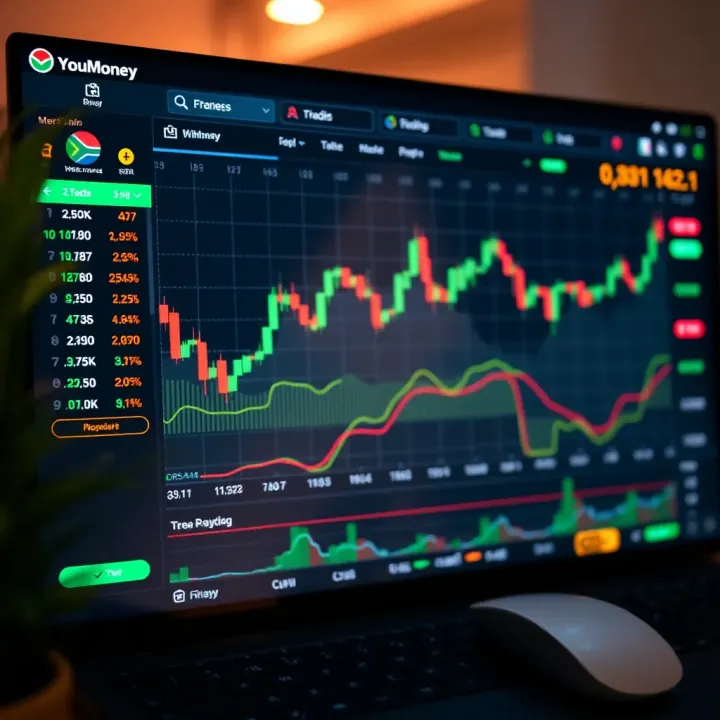
📊 Discover YouMoney Binary's features, risks, and smart strategies for South African traders. Get practical insights into binary options trading today! 🇿🇦
Based on 14 reviews