
Best Forex Trading Apps for Beginners in South Africa
Looking for the best forex trading app in South Africa? 📈 Discover key features, safety tips, costs, and practical advice to start and manage risks confidently.
Edited By
Isabella Clarke
Forex trading can seem like a maze to many, especially for beginners or those juggling busy lives in South Africa. However, there’s no need to get tangled in complicated jargon or strategies that require endless screen time. This guide presents a simple forex trading approach that’s practical, easy to follow, and well-suited for local market conditions.
The foreign exchange market operates 24 hours a day, five days a week, letting you trade currencies from different countries like the US dollar (USD), euro (EUR), or South African rand (ZAR). Unlike shares or commodities, forex trading involves buying one currency and selling another simultaneously, focusing on currency pairs such as USD/ZAR or EUR/USD.

A straightforward strategy means focusing on key tools and clear signals without overloading yourself. You’ll learn how to read chart patterns, use essential indicators like moving averages, and set entry and exit points to manage risk effectively. For instance, tracking the 50-day and 200-day moving averages often highlights trend direction—a useful tool when keeping an eye on the rand’s fluctuations amid factors like Eskom’s load shedding or local economic shifts.
Risk management is critical. Controlling your trade size and setting stop-loss orders help protect your capital. The goal here isn’t overnight riches but steady, manageable growth in your trading account.
Keep it simple: Clear rules and consistent habits often beat complex strategies that promise more but deliver confusion.
Whether you’re an investor adding currency trades to your portfolio or a broker advising clients, this guide will help you focus on what matters. You’ll also find tips to adapt this method considering South Africa’s unique market features, such as volatility influenced by SARB’s interest rate decisions.
In the sections ahead, you will find step-by-step instructions that break down the strategy, tools to use, and examples relevant to South African traders. This ensures you step into the forex market with confidence, without the burden of unnecessary complexity.
Grasping the basics of forex trading is the stepping stone to becoming a confident trader. This section breaks down the fundamentals, so you avoid the common pitfalls and make informed decisions from the start. When you understand what you're dealing with—how the market moves, which currencies are key, and how it all works locally—you save yourself time and money.
Forex trading is the buying and selling of different currencies, aiming to make a profit from changes in exchange rates. Imagine you buy euros using rands when the rate is favourable, and then sell them later when the rand weakens, pocketing the difference. It’s a global market that operates 24 hours a day, with major trades happening across continents. Traders use various strategies to predict these moves, but at its core, forex is all about currencies and timing.
Not all currency pairs are created equal. Some are more liquid and easier to trade, which is ideal for beginners. The major pairs include EUR/USD (euro against US dollar), GBP/USD (British pound versus US dollar), and USD/JPY (US dollar versus Japanese yen). For South Africans, the USD/ZAR pair (US dollar against the rand) is especially important due to its direct connection to local economic conditions. These pairs tend to have tighter spreads and more predictable patterns, which helps when applying simple strategies.
South African traders deal with a forex market that follows global trends but has its own quirks. The rand is often volatile due to local factors like political developments, changes in commodity prices, or Eskom’s loadshedding schedules. Forex trading here usually happens through brokers regulated by the FSCA (Financial Sector Conduct Authority). Also, the active trading hours line up partly with both European and US sessions, creating opportunities for local traders to engage when it suits them. That said, understanding when these market hours overlap can give you a better edge.
Starting with a clear picture of how forex works worldwide and locally gives you a solid base. It’s like knowing the veld before you go on a trek—you’re less likely to get lost.
Fresh traders who get to grips with these foundations will find it easier to work through more complex strategies later on. Plus, keeping an eye on the rand’s behaviour and key pairs ensures your efforts stay grounded in South African realities, making trading practical and manageable.
In forex trading, having the right tools and indicators is like having a trusty map and compass when navigating unknown terrain. They don’t guarantee success, but they help you make sense of the market’s twists and turns. This section focuses on three essential elements: moving averages, support and resistance levels, and basic oscillators. Together, these provide a practical framework to identify trade opportunities, manage risk, and boost your confidence in decision-making.
Moving averages smooth out price data to reveal underlying trends. Think of them as a running average of a currency pair’s price over a set time, like 50 or 200 days. In South African forex markets, where volatility around the rand (ZAR) can spike due to economic news or Eskom load shedding, moving averages help traders see beyond short-term noise.
For example, if the 50-day moving average crosses above the 200-day moving average, it signals a potential upward trend, indicating a good time to consider buying. On the flip side, if the 50-day dips below the 200-day, that might warn of a downtrend. These signals aren’t foolproof but give a clear, easy-to-read guide to whether to stay in the market or hold back.
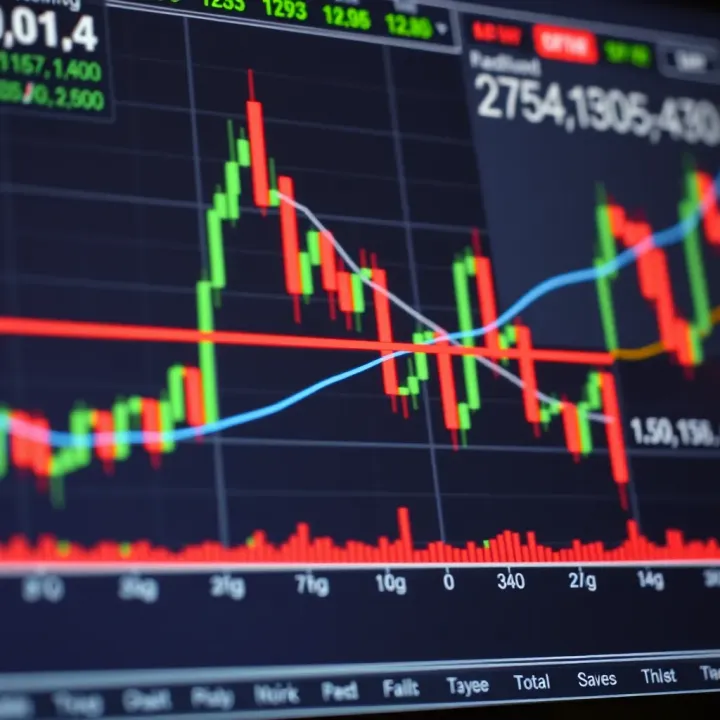
Support and resistance levels act like the market’s floor and ceiling—the price points where buying or selling pressure tends to pause or reverse. Spotting these levels helps you predict where a currency pair might bounce or face hurdles.
For instance, when the USDZAR pair repeatedly drops to around R14.50 but bounces back, that level becomes strong support. Conversely, if it struggles to break above R15.00 despite several tries, that’s resistance. Knowing these points helps traders set entry and exit spots, minimise shocks from sudden moves, and manage stop-loss orders more wisely.
Oscillators are tools that measure market momentum and help flag overbought or oversold conditions. Popular simple oscillators include the Relative Strength Index (RSI) and the Stochastic Oscillator. When these indicators show a currency is overbought—meaning it’s climbed too fast—they suggest it might be time to sell or wait. Likewise, oversold signals could point to a good buying opportunity.
If, for example, the RSI for the EURZAR rises above 70, it signals the market may be too hot and due for a correction. Below 30, the market might be oversold and ready to rebound. Using these oscillators alongside moving averages and support/resistance levels increases your chances of timing trades more effectively.
Together, these tools form a clear, manageable system for traders to navigate the sometimes bumpy forex terrain, especially within the unique South African context. They’re not about fancy charts or endless indicators but about practical clues that simplify your trading decisions.
Applying this trio—moving averages, support and resistance, and oscillators—builds a strong foundation for a straightforward forex strategy. It’s like having a solid toolbox for everyday tasks: reliable, easy to use, and ready when you need it most.
A clear, practical approach to executing a forex trading strategy helps you stay disciplined and reduces costly mistakes. By breaking down the process into manageable steps, you gain control over your trades and can react calmly rather than emotionally. This section lays out how to prepare your setup, decide when to enter trades, and recognise the right time to exit—all crucial to protect your capital and lock in gains.
Before trading, ensure your workspace and tools are ready. This includes setting up your trading platform with the necessary chart timeframes, indicators like moving averages or oscillators, and an accessible journal to track your trades. For example, if you plan to apply a simple trend-following strategy, add a 50-period moving average on your charts to help identify the prevailing trend.
Don’t overlook practical matters: have a reliable internet connection, preferably with backup like mobile data, especially if you live where load-shedding disrupts power. A quiet environment will help you focus during market hours, which for major currency pairs often means aligning with London or New York sessions—the busiest and most liquid times.
Entering a trade requires clear, objective signals. Your strategy should define exact conditions that trigger a buy or sell decision. For instance, a basic rule could be: buy when the price crosses above the 50-period moving average and the RSI (Relative Strength Index) oscillator is below 70, indicating upward momentum without being overbought.
Avoid vague rules like "buy when it looks good". Instead, rely on measurable indicators that reduce guesswork. Also, check for confirmation—such as a candlestick pattern or break of a recent high—to confirm momentum.
Implementing a checklist can help. For example:
Trend confirmed by moving average direction
RSI below 70 but rising
Price respects support level
When these line up, the trade is on.
Exiting a trade too early can leave profit on the table; too late can erode gains. Your exit strategy should balance risk and reward clearly. Setting stop-loss and take-profit points before entering a trade keeps emotions in check. For example, place a stop-loss just below a recent swing low (for buys) and a take-profit at twice your risk distance to maintain a 2:1 reward-to-risk ratio.
Alternatively, use trailing stops that follow price movements to protect profits as the trade moves favourably. If your chosen indicator shows weakening momentum, like RSI crossing below 50, it might signal a good moment to close.
Sticking to your exit rules, even when the market gets tempting, prevents unnecessary losses and helps you build a consistent track record.
In short, disciplined execution—starting with a well-prepared setup, followed by objective entry points and a solid exit plan—is what makes a simple forex trading strategy effective and sustainable in South Africa’s market conditions.
Trading forex without proper risk management is like driving a bakkie in heavy rain without lights—you’re bound to run into trouble sooner or later. Managing risks helps preserve your trading capital so you can stay in the game longer and avoid devastating losses. This section focuses on practical ways to protect your money in volatile markets, especially important in South Africa where rand swings and global shifts can affect forex significantly.
Stop-loss and take-profit orders act like safety nets. Using them wisely means you define your maximum loss and expected gain before entering a trade. For example, if you buy EUR/ZAR at 19.50 expecting it to hit 19.70, you might set a stop-loss at 19.40. This way, if the rand suddenly strengthens locally or an economic update hits unexpectedly, you limit your losses.
The key is to place stops at levels that make sense based on recent support or resistance zones, rather than picking arbitrary numbers. Tie the stop-loss to technical indicators like past swing lows or moving averages. Similarly, take-profit targets should align with realistic price levels that have acted as resistance before.
How much you risk on each trade should fit your overall comfort level and account size. A common rule of thumb is to risk no more than 1-2% of your trading capital per trade. For instance, with a R10,000 account, risking R200 per trade guards against a few losing streaks wiping you out.
Calculate position size by considering your stop-loss distance. If your stop-loss is 100 pips and you want to risk R200, the lot size would be smaller than if the stop-loss is just 50 pips. This keeps your risk consistent, no matter how volatile the pair.
Many traders falter by letting emotions take the wheel. Chasing losses, overtrading, or moving stop-loss orders further away can quickly blow your account. Guard against this by sticking to your plan and using your stop-loss as non-negotiable.
Also, don’t trade too frequently just to catch every market move—less can be more. Remember, markets like USD/ZAR can be unpredictable around South African economic news or Eskom loadshedding announcements. Sometimes, sitting out or reducing risk around those times protects your capital.
Successful trading is less about picking winners and more about managing losses. Protect your capital first, and profits will follow.
Risk management is your trading backbone. It helps you stay calm, control losses, and sharpen your decisions in South Africa’s unique forex environment.
Adapting your forex trading strategy to local market conditions is more than just a smart move — it's essential for South African traders. The Rand (ZAR) often behaves differently than major currencies like the US dollar or euro, responding to unique economic, political, and social factors. Understanding these nuances helps avoid unexpected shocks and positions you to make smarter trades.
The Rand is notoriously volatile, swinging widely during times of political uncertainty, commodity price changes, or global risk shifts. For example, when mining output drops or there’s uncertainty about fiscal policy from Treasury, the Rand weakens sharply. Traders need to watch local economic releases closely, like the latest inflation data, SARB (South African Reserve Bank) interest rate decisions, and unemployment figures.
This volatility means standard stop-loss and take-profit levels from other markets might need adjusting. A wider stop-loss could prevent premature trade closures during spikes. Moreover, staying tuned to SARS tax announcements or public unrest updates can help you avoid trading during turbulent periods.
Picking a broker that understands the South African context makes a big difference. Many international platforms offer access to forex markets, but look for those regulated by the FSCA (Financial Sector Conduct Authority) to ensure your funds are protected. Brokers like IG, Plus500, or local options that offer ZAR accounts save you unnecessary conversion fees.
Also, check if the platform supports local payment methods — EFTs from South African banks like FNB or Capitec are often faster and cheaper than card payments. Having access to real-time Rand currency tools and economic calendars tailored for South Africa on your platform can directly impact your trade decisions.
Loadshedding remains a reality for many traders across South Africa, potentially disrupting your internet connection or power supply during critical trading moments. Plan trades around Eskom’s scheduled loadshedding stages to avoid sudden disconnections. If possible, use an uninterruptible power supply (UPS) or backup mobile data to stay online.
Moreover, remember that the forex market operates 24 hours globally but South African active market hours overlap with London and New York sessions at specific times. Greying out the early morning awkward hours and focusing on 3 pm to 11 pm SAST, when both London and US markets are active, tends to give better liquidity and tighter spreads.
Adapting your forex approach to South African realities, especially the Rand’s quirks, broker reliability, and local power challenges, can give you an edge — ensuring your trades do not falter on avoidable practical issues.
By taking these local factors into account, your simple forex trading strategy becomes more resilient, practical, and tailored to the environment you actually trade in — saving you time, costs, and stress.
Looking for the best forex trading app in South Africa? 📈 Discover key features, safety tips, costs, and practical advice to start and manage risks confidently.
🎥 New to forex? This guide helps South African beginners learn forex trading basics, find top video lessons, avoid mistakes, and grow skills confidently.

📈 Discover a free online forex trading course designed for beginners in South Africa! Learn key strategies, risk management, and demo account tips to trade confidently.

Learn proven forex trading strategies for beginners in South Africa 🇿🇦. Master risk management, analysis techniques, and practical tips for success in forex.
Based on 10 reviews