
Basics of Forex Trading for South African Traders
Learn the fundamentals of forex trading 🇿🇦, from market basics and risk management to choosing brokers and strategies tailored for South African traders 📉💹.
Edited By
Emily Parker
Forex trading, or foreign exchange trading, allows individuals and institutions to buy and sell currencies on a global stage. Unlike traditional stock markets, the forex market never closes, running 24 hours a day, five days a week. This continuous operation makes it an attractive option for traders across South Africa and beyond, who need flexibility to fit trading around work or personal commitments.
One of the key advantages lies in its accessibility. With just a basic internet connection and a trading account on platforms used widely in South Africa, like IG or easyMarkets, anyone can participate. The lower barriers to entry don't mean you trade blindly, though — understanding risk and the mechanics of currency pairs remains crucial.
Liquidity is another major benefit. The forex market is the largest financial market globally, with daily volumes surpassing $6 trillion. This high liquidity means you can enter and exit trades swiftly without significant price gaps, unlike in less liquid markets such as certain shares or commodities.
Profit potential exists both when currencies strengthen and weaken, as you trade in pairs. For example, if you anticipate the rand weakening against the US dollar, you can open a position that benefits from that move. That flexibility adds a layer of opportunity compared to buy-only markets.
It's worth noting that while forex trading offers exciting prospects, it carries risks, especially related to leverage. South African traders should ensure they understand local regulatory guidelines from the Financial Sector Conduct Authority (FSCA) and use risk management strategies to protect capital.
Considering South Africa’s financial environment, forex trading also fits well with the growing trend of diversifying investment portfolios. Many South Africans face limited access to international stock markets or property investment due to costs or exchange control regulations, making forex a viable alternative.
Round-the-clock trading: Trade anytime during the week, useful with time-zone differences.
High liquidity: Easier to enter/exit positions swiftly.
Low capital requirements: Start with modest amounts compared to other markets.
Leverage availability: Amplify potential gains (and risks).
Global access: Participate in world currencies from wherever you are.
In essence, forex trading serves as a flexible, liquid market offering multiple ways to engage and profit. That said, it’s not a stroll in the park — solid knowledge, local awareness, and discipline remain essential for success.
Forex trading gives you a direct line to the world's largest financial arena, where currencies from all corners of the globe are exchanged every day. This access means you can trade a wide range of currency pairs—from the US dollar against the euro, to emerging markets like the South African rand versus the Nigerian naira. For traders based in South Africa, this opens up opportunities beyond local markets, allowing them to respond to global economic shifts and diversify their investments.
At its core, forex trading involves buying one currency while simultaneously selling another. Traders speculate on whether a currency will strengthen or weaken against its counterpart. For example, if you expect the euro to strengthen against the US dollar, you’d buy the EUR/USD pair. If the euro gains value, you can sell back your position at a profit. The forex market operates over the counter, meaning trades happen directly between parties, often through online platforms, rather than via a central exchange.
Most retail traders access forex through brokers or platforms like IG, FXTM, or HotForex, which offer live pricing and trading tools. What’s handy here is the ability to trade smaller amounts, making forex accessible even if you don’t have a big capital stack.
The forex market dwarfs most others in sheer volume, moving over US$6 trillion daily according to the Bank for International Settlements (BIS). This liquidity comes from a mix of players, including large banks, multinational companies, hedge funds, and retail traders.
Unlike stock markets, forex trading never really sleeps. It shifts across time zones—from Tokyo’s opening in early hours SAST, through London’s bustling session, onto the busy New York crowd later in the day. This global participation adds to the currency market's depth and smooths out trading, reducing the chances of big price jumps caused by single events.
Access to this vast, continuous global market gives traders flexibility and plenty of chances to act on international economic news, political developments, and central bank decisions—all key drivers behind currency movements.
Having access to the global currency market means you get to trade at almost any hour that suits you, accommodate various risk appetites, and tap into multiple currency pairs. But while these advantages are attractive, it’s essential to understand the market dynamics, broker fees, and tools available to navigate this vast space effectively.
Forex trading attracts many because it offers distinct chances to profit, mainly through currency fluctuations and leverage. Understanding these elements helps traders manoeuvre the market with greater confidence and make the most of opportunities.
Currency values constantly move due to economic reports, political events, and market sentiment. Traders who tap into these fluctuations can profit by buying currencies expected to strengthen and selling those likely to weaken. For example, if the South African rand weakens against the US dollar during a political uncertainty period, a trader might sell rand and buy dollars, expecting to reverse this later when stability returns.
These swings may seem small but can add up significantly due to the sheer volume and frequency in forex markets. Unlike other investments, forex markets respond instantly to global news, which means chance for quick gains or, conversely, losses if not careful. It pays to keep an eye on key economic indicators like interest rate changes by the South African Reserve Bank (SARB), inflation trends, or major geopolitical shifts affecting global trade.
Leverage lets traders control a larger position with a smaller amount of capital. For example, a leverage ratio of 100:1 means you can trade R1,000 as if it were R100,000. This magnifies potential profits significantly, but the flipside is that losses can escalate equally fast. In South Africa, brokers usually offer leverage up to 1:200, though regulators recommend using it cautiously.
Leverage can make forex accessible for those with limited starting capital but requires sound risk management. Using stops and limits to protect your trade is essential, since a sudden market move can wipe out invested capital quickly. Successful traders often treat leverage like a double-edged sword—powerful if wielded carefully and risky otherwise.
Leverage can boost profits on modest moves but demands discipline, strategy, and constant market awareness.
To work in your favour, combine leverage with well-informed decisions about currency pairs, stay updated on market events, and avoid impulsive trades. Over time, grasping these profit mechanisms can turn forex trading into a viable way to grow your portfolio, especially if you stay grounded in realistic risk tolerance.
By appreciating how currency fluctuations and leverage shape profits, South African traders can approach forex with a clearer strategy that balances opportunity and caution.
Liquidity and trading hours are two of the biggest draws to forex trading, especially for South African traders aiming to make the most from the global market.
One standout benefit of forex trading lies in its deep liquidity. Daily forex turnover exceeds US$6 trillion, making it one of the most liquid markets worldwide. This vast liquidity means traders can enter and exit positions quickly without causing big price swings. For example, if you want to buy US dollars against the South African rand (USD/ZAR), you won't usually struggle to find a counterparty at a fair price. This contrasts with less liquid markets—say, certain South African small-cap stocks—where buying or selling large volumes can affect the price significantly.
High liquidity also tightens spreads, which is the difference between the buying and selling price. Tighter spreads mean you keep more of your potential profits. Liquidity tends to spike during overlapping trading sessions, such as the London-New York window, providing favourable conditions for active traders.
Remember, liquidity reduces slippage—the difference between expected trade price and executed price—crucial for those trading on short-term movements.
Forex isn’t tied to a fixed timetable like traditional stock exchanges. It operates 24 hours a day, five days a week, moving seamlessly through major financial hubs: Sydney, Tokyo, London, and New York. This around-the-clock schedule lets you trade almost anytime, fitting trading around your daily commitments rather than the other way around.
For South African traders, this flexibility is practical. Since SA trades mostly in the middle or later part of the London session and the start of the New York session, you can catch volatile moves in the early morning before work or late evening after hours. For example, an active forex trader can monitor the Rand’s reaction to local data releases like SARB interest rate decisions or mining exports without waiting for a local market to open.
This continual trading cycle also helps in managing risks. If an unexpected event affects currencies overnight, you’re not stuck holding a position until markets reopen days later—as might happen with the JSE.
In summary, the liquidity and continual availability of forex trading create real opportunities. You get sharper price execution thanks to liquid markets, plus the freedom to trade during hours that suit you best. Especially with volatile currencies like USD/ZAR or EUR/ZAR, these features can make all the difference between a smooth trade and a frustrating experience.
Forex trading stands out for its flexible nature and the ease with which South African traders can access the global currency market. This flexibility allows traders to engage with forex round the clock and adjust trading strategies to fit their personal schedules, a real advantage given the disruptions like loadshedding or busy workdays common here.
One appealing factor for many local traders is the low barrier to entry in forex trading. Unlike other investment fields requiring substantial upfront capital, forex often allows starting with modest amounts, sometimes as low as a few hundred rand. This makes it possible for individuals from various economic backgrounds to participate.
To add, most forex brokers serving the South African market offer demo accounts. These free practice environments let beginners trade without risking real money while they build their understanding and confidence. When ready to move into the live market, traders can begin with affordable minimum deposits, which removes the intimidating cost hurdle often linked to traditional investments.
The advent of reliable mobile and online platforms has transformed forex trading accessibility in South Africa. Whether you’re in Cape Town or a rural village, a good internet connection and a smartphone or laptop are enough to start trading forex. Brokers like IG, Plus500, and AvaTrade South Africa provide user-friendly apps tailored to local traders, with interfaces in English and additional languages common here.
These platforms offer real-time price updates, easy order execution, and a range of technical analysis tools so you can make informed decisions on the go. For instance, you might be sitting on a stoep at a friend's place when you spot a sudden dip in the rand-dollar pair; with your mobile app, you can react quickly rather than wait until you’re back at a desktop.
Good mobile platforms reduce the gap between market movements and trader reaction, which is critical in the fast-moving forex market.
In summary, the combination of low initial costs and versatile, accessible platforms means trading forex is no longer an exclusive activity for big banks and investors. For South Africans juggling everyday challenges, these benefits provide a real chance to explore forex on their own terms.
Trading forex without a solid grasp of risk management and education is like driving blindfolded — it’s bound to end in trouble. Even seasoned traders stress the need to protect one’s capital first, because without funds, there’s no game to play. This section explores practical tools that help mitigate losses, alongside the critical role of ongoing education.
Managing risk is about setting boundaries on what you’re willing to lose in any trade. For instance, stop-loss orders are a common mechanism where you specify the exact level at which a losing trade will automatically close. Imagine you buy EUR/ZAR at 19.50 hoping it will rise, but to guard yourself, you place a stop-loss at 19.30. If the price drops to that level, your position closes before the losses pile up.
Another key tool is position sizing — deciding how much of your capital you put into each trade. Say you have R10,000 to trade with; risking 2% per trade means only R200 is on the line at any moment. This avoids wiping out your account from one bad bet.
More advanced methods include hedging (taking offsetting positions) and using take-profit orders to lock in gains. Platforms popular in South Africa like IG or Plus500 often provide built-in tools that allow traders to set these limits conveniently.
Good risk management doesn’t eliminate losses but controls them, so you stay in the market longer and learn from mistakes.
Education is the backbone of forex trading success. The market moves for many reasons — economic data, geopolitical events, central bank decisions — none of which you can guess randomly. Understanding these factors helps you make informed decisions rather than just hoping for the best.
Several South African traders start their journey by enrolling in courses offered by local brokers or tech platforms, combining theory with live practice accounts. This hands-on approach lets you test out strategies without risking real money.
Besides courses, reading daily forex news and analysis sharpens your market sense. For example, following the South African Reserve Bank’s repo rate announcements closely can help predict ZAR movements. Forums and trading communities are other valuable resources, where you can discuss tactics and pitfalls with fellow traders.
Lastly, education builds emotional discipline, which many underestimate. Knowing when to exit a losing trade or avoid “chasing” losses comes from experience and grounded learning.
Bringing it all together, practising sound risk management and committing to continuous education make forex trading less of a gamble and more of a calculated endeavour. South African traders who master these skills navigate the currency markets with greater confidence and sustainability.
Learn the fundamentals of forex trading 🇿🇦, from market basics and risk management to choosing brokers and strategies tailored for South African traders 📉💹.
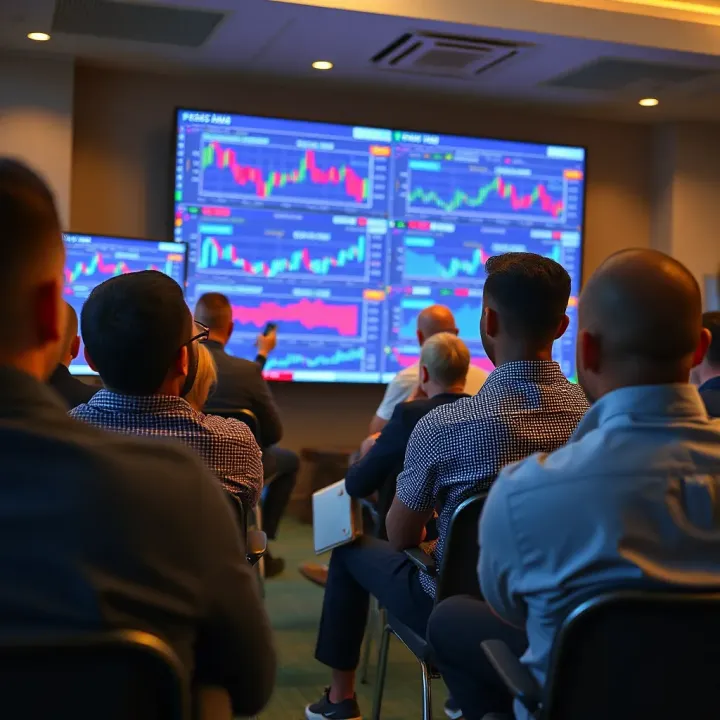
Learn how forex trading seminars in South Africa can boost your skills 📈 Discover top providers, key topics, and tips for maximizing your trading education.
📈 Learn the key forex trading sessions impacting South African markets, understand their timing and volatility, and get practical tips to sharpen your trading strategies.
Discover how forex trading seminars in South Africa boost your skills 📍 Learn to pick the right event, understand costs, and trade smarter 💡
Based on 10 reviews