
Where to Learn Forex Trading in South Africa
Explore top spots to learn forex trading in South Africa 📊. Find trusted courses, local trainers, platforms, and communities to start trading confidently.
Edited By
Isabella Clarke
Forex trading can seem like a tough nut to crack, especially for beginners in South Africa. But with the right approach and resources, it’s entirely possible to build a solid foundation and trade with confidence. Understanding the market basics, practising regularly on demo accounts, and picking trustworthy brokers all play a big role.
South Africa’s unique economic environment affects forex trading too. Factors like rand volatility, government policies, and global commodity prices can impact currency pairs. This means learners should stay alert to local news and economic data releases that sway forex markets.
To get started, focus on grasping how currencies are traded and what drives their prices. This isn’t just about jargon but about recognising real-world influences such as interest rates, inflation, and geopolitical events. Use practical examples relevant to Mzansi’s context — for instance, how rand strength affects imports or tourism.
Demo trading accounts offered by local and international brokers let you practise without risking your R. They replicate live market conditions, so you can test strategies and get comfortable with trading platforms. Take your time here; rushing into live trading without hands-on experience often leads to unnecessary losses.
Choosing a regulated broker ensures your funds are safe and that the trading environment meets certain standards. The Financial Sector Conduct Authority (FSCA) regulates many South African brokers. Confirm a broker’s licence and local presence before opening an account.
Sticking to sensible risk management rules from the start is a must. Never risk more than a tiny fraction of your capital on a single trade and use stop losses to protect against sharp moves. This discipline helps keep losses manageable while you learn the ropes.
In summary, start by learning how the forex market moves, practise on demo accounts tailored to local conditions, pick a well-regulated broker, and manage risks carefully. These steps will help you avoid common pitfalls and steadily grow your trading skills in South Africa’s forex scene.
Starting off in forex trading without a firm grasp of the basics is like setting out on a trip without a map—you might get lost or take a costly detour. For South African beginners, understanding forex trading fundamentals is the bedrock of successful trading. It helps you make sense of market movements, avoid common pitfalls, and know exactly when to enter or exit trades.
The forex market is where currencies are bought and sold. Unlike the JSE, which deals with shares, forex operates 24/5 globally, making it accessible at nearly any time. Currency pairs such as USD/ZAR or EUR/USD represent the relative value between two currencies. If you’re trading USD/ZAR, you’re betting on whether the US dollar will strengthen or weaken against the South African Rand (ZAR). For example, a move in USD/ZAR from 15.00 to 15.50 means the dollar has gained relative to the rand, which could reflect economic events both locally and internationally.
Familiarising yourself with major, minor, and exotic pairs is critical. The Rand pairs like USD/ZAR and EUR/ZAR are known as exotic pairs because they can show more volatility and wider spreads compared to, say, EUR/USD.
To navigate forex, you need to know terms like “pip” (the smallest price move), “spread” (difference between buying and selling prices), and “leverage” (borrowing funds to increase exposure). For instance, a broker offering 1:100 leverage allows you to trade R1,000 as if you had R100,000, but this magnifies both gains and losses.
Also, grasp the idea of stop-loss orders, which cap your potential losses, and take-profit orders, which lock in gains automatically. These tools are essential for controlling risk and protecting your investment.
The Rand is unique because it often reflects domestic realities like loadshedding, political shifts, and commodity prices (South Africa is a major exporter of gold and platinum). A surge in gold prices can strengthen the Rand, affecting USD/ZAR movements.
Trading Rand pairs requires awareness of South African economic releases such as SARB interest rate announcements or inflation data. These impact currency value and can trigger sharp market reactions. For instance, if SARB raises rates, it might boost the Rand as investors seek higher yields, but the market may also react to how sustainable that hike is in the current economic climate.
Understanding the interplay between global events and South African factors gives you an edge when trading forex locally.
Mastering these forex basics lays a foundation you can build on with experience and more advanced strategies. It’s the key step to trading confidently, especially amid South Africa’s particular economic landscape.
Using a demo forex trading account is one of the best ways for South African beginners to learn the ropes without risking real money. These accounts simulate live market conditions but use virtual funds, giving you a safe space to practice. This hands-on approach helps build confidence, understand platform tools, and test strategies before stepping into the live market.
Not all demo accounts are created equal, so picking the right platform matters. Look for brokers regulated by the Financial Sector Conduct Authority (FSCA), as they tend to offer reliable and transparent services. For example, platforms like IG South Africa or Plus500 provide user-friendly demos with accurate price feeds and a wide range of currency pairs, including the South African Rand (ZAR).
Ensure the demo lets you experiment with essential features such as leverage settings, stop-loss and take-profit orders, and charting tools. The interface should feel like the live platform to avoid a steep learning curve later. Also, check how long the demo account stays active; some expire after 30 days while others remain available indefinitely.
A major advantage of demo accounts lies in the ability to try out different trading strategies without the pressure of losing real cash. For instance, you can test scalping techniques on the USD/ZAR pair or explore swing trading on major pairs like EUR/USD. By experimenting, you learn firsthand what works and what doesn’t given your risk appetite and time commitment.
You might discover that setting tight stop-loss limits works better in volatile periods or that trading around South African economic events requires a different approach. This trial-and-error phase is vital and lets you refine your tactics so that when you transition to live trading, your choices are backed by experience rather than guesswork.
A demo account isn’t only about placing trades; it’s a learning tool. Keep a detailed journal of your trades, noting why you entered and exited positions, what went well, and where you slipped up. Over time, this record reveals patterns—maybe you struggle during high-volatility sessions or tend to hold losing trades for too long.
Reflecting on these insights helps adjust your mindset and method. Many platforms support exporting trade history or have built-in analytics to highlight key metrics like win/loss ratios and average returns. For the aspiring South African trader, combining this with following local economic news equips you with context to understand your results better.
Practising consistently on a demo account shapes disciplined habits. It reduces impulsive decisions and prepares you to cope with the unpredictability of real forex markets.
Using demo accounts fits naturally into a step-by-step learning process. Start slow, focus on mastering platform mechanics and gradually build your strategy and discipline before moving on. With this foundation, trading in the live market becomes less daunting and more strategic, increasing your chances of success.
Choosing a trustworthy broker and the right trading platform is a key step for any South African beginner looking to trade forex successfully. It’s not just about the software interface or the lowest fees; how the broker is regulated, the transparency of their costs, and the quality of their client support can make a big difference in your trading journey. A solid broker protects your funds, offers reliable execution of trades, and provides tools that suit your style and learning curve.
In South Africa, the Financial Sector Conduct Authority (FSCA) regulates forex brokers to ensure they follow strict rules safeguarding traders' interests. Selecting an FSCA-licensed broker means your money is held in segregated accounts, keeping it separate from the broker’s operating funds, and that the broker undergoes regular audits. For example, brokers like IG or CM Trading operate under FSCA oversight, which adds a layer of safety for local traders. Always check the FSCA website or directly confirm a broker's licence to avoid unregulated entities that could pose risks of fraud or unfair trading.
The costs involved in trading can eat away at your profits if you’re not careful. Brokers charge in different ways: via spreads (the difference between buying and selling prices), commissions, or both. For instance, some brokers offer tight spreads on popular pairs like USD/ZAR but compensate with commissions. It’s worth comparing these fees alongside platform features — does the platform support one-click trading, real-time charts, or advanced order types? Many South African traders prefer platforms like MetaTrader 4 or 5 for their flexibility and wide broker support. Remember, the cheapest option isn’t always best if the platform lacks essential tools or suffers frequent downtime.
Trading can be overwhelming, especially when you’re new. Reliable customer support matters. Brokers with local South African offices or responsive online support during your trading hours can save you headaches. Some brokers back their service with helpful educational materials—webinars, tutorials, or articles tailored for beginners. For example, a broker offering live chat support in English and Afrikaans and regular free workshops can make your entry smoother. Check reviews or ask fellow traders about the responsiveness and helpfulness of a broker’s support team before signing up.
The right broker and platform combination isn’t just about access to markets—it’s your safety net and training ground rolled into one.
By keeping these practical points in mind—regulation, fees, platform quality, support, and education—you’re better equipped to navigate the South African forex scene confidently. Taking time to select well now saves you from costly mistakes later and helps build a strong foundation for your trading career.
A trading strategy paired with a sound risk management plan acts as your safety net and roadmap in the often-volatile forex markets. Without a clear strategy, traders can quickly lose direction, leading to impulsive decisions and financial losses. Getting this right helps you set clear rules for entering and exiting trades, making your approach systematic rather than guesswork.
Technical analysis involves reading price charts and using indicators like moving averages or support and resistance levels to predict future price movements. For instance, when trading the South African Rand (ZAR), you might observe how it reacts at certain price points against the US Dollar (USD) or Euro (EUR). Fundamental analysis looks at economic factors such as interest rates set by the South African Reserve Bank, unemployment data, or commodity prices like gold and platinum, which influence the Rand’s strength. Combining technical charts with these economic indicators sharpens your trading decisions.
Setting achievable goals keeps trading purposeful and manageable. Aiming for steady gains of, say, 2% per month is more practical than expecting overnight riches. Equally important is defining stop-loss levels—the maximum amount you’re ready to lose in a trade. For example, if you enter a USD/ZAR trade, you might set a stop loss at 1% below the entry price to limit losses. Clear goals and limits prevent reckless behaviour and help you stay disciplined during market ups and downs.
Risk management isn't about avoiding losses entirely—that's impossible—but about keeping losses small enough to survive and thrive. One common rule is not to risk more than 1-2% of your trading capital on a single trade. So, if you have R10,000 to trade, each trade shouldn’t put more than R100 to R200 at risk. Using tools like stop-loss orders and position sizing are effective ways to protect your capital. Remember, preserving your trading kitty is key; if you blow it all in a few trades, recovery becomes much harder.
Successful forex trading in South Africa depends largely on discipline — sticking to your strategy and risk plan helps keep emotions in check and maintains consistency over time.
In short, building a solid trading strategy combined with prudent risk management gives you a fighting chance against the unpredictability of forex markets. It turns trading from a risky game into a professional endeavour, suitable for the local economic conditions shaping the South African Rand and beyond.
South African beginners in forex trading gain a significant edge by tapping into local resources and communities. These provide context-specific insights that global platforms often miss, like understanding how Eskom loadshedding cycles or rand volatility impact currency movements. Local support networks also offer opportunities to share trading tips relevant to South Africa’s unique economic and political environment.
Attending local forex training courses or workshops builds a solid foundation. Organisations such as the Johannesburg Stock Exchange (JSE) often collaborate with experienced traders to host these sessions. These courses cover fundamental concepts, practical strategies, and regulatory compliance specific to South Africa. For example, you might find a workshop that explains how to navigate FICA (Financial Intelligence Centre Act) requirements while trading or how daily rand fluctuations affect paired currencies.
Besides formal training, workshops provide a chance to connect face-to-face with traders who understand South African market nuances and challenges. This personal interaction often clarifies concepts that can seem abstract if only learnt online.
Joining online forums and South African-focused social media groups can keep you up to speed and provide real-time support. Platforms like MyBroadband forums or dedicated Facebook groups offer spaces where traders share tips, alert others to sudden market moves, and discuss brokers regulated locally. A casual post asking about fees or spreads can yield practical feedback from fellow South Africans who have tried those brokers.
These groups also foster accountability and motivation, both crucial for brand-new traders. They provide a sounding board if your strategy is off or if unfamiliar economic events make markets jittery.
Forex trading ties closely to economic and political shifts, so keeping an eye on local news affects your timing and strategy. For instance, announcements about changes in South Africa’s repo rate by the South African Reserve Bank (SARB), election outcomes, or unexpected strikes in key sectors like mining or transport influence the rand’s value.
Staying informed through trusted South African news sources ensures you don’t miss crucial developments. Combining this awareness with your trading plan helps you anticipate rather than react blindly to market volatility.
Engaging with local courses, community discussions, and economic updates offers South African traders a solid grounding and sharpens the edge needed for success in forex trading.
Leveraging these local resources is a practical way to build confidence, avoid common pitfalls, and learn from those who experience the markets under the same conditions as you.
Explore top spots to learn forex trading in South Africa 📊. Find trusted courses, local trainers, platforms, and communities to start trading confidently.
Discover the best places to learn forex trading in South Africa 🇿🇦. Find local courses, online platforms, free & paid options to start your trading journey confidently 📈.

Learn the fundamentals of forex trading 🇿🇦, from market basics and risk management to choosing brokers and strategies tailored for South African traders 📉💹.
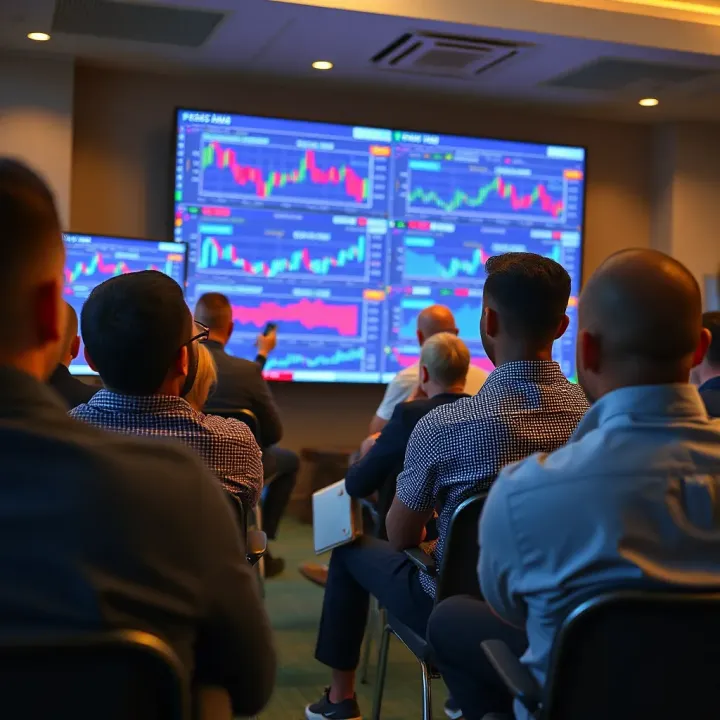
Learn how forex trading seminars in South Africa can boost your skills 📈 Discover top providers, key topics, and tips for maximizing your trading education.
Based on 13 reviews