
Basics of Forex Trading for South African Traders
Learn the fundamentals of forex trading 🇿🇦, from market basics and risk management to choosing brokers and strategies tailored for South African traders 📉💹.
Edited By
Henry J. Foster
Forex trading can seem like a promising way to make money fast, especially for South African traders keen to tap into global markets. However, the reality isn't always straightforward. There are clear downsides that every trader should understand before risking their cash.
At its core, forex trading involves buying and selling currencies with the hope of profiting from price changes. But this market's high volatility means prices can swing wildly within minutes. For example, unexpected political announcements or economic data releases from major economies like the US or China can cause sharp currency moves. If you're not prepared, this can lead to heavy losses just as quickly as gains.
Leverage is another double-edged sword common in forex trading. While it lets you control a large position with a relatively small deposit, it also magnifies losses. Say you use 100:1 leverage to control R100,000 with just R1,000 in your account. A 1% adverse move wipes out your deposit. Many South African brokers offer high leverage, but without tight risk management, it can leave traders holding an empty wallet.
Beyond the numbers, forex trading demands strong psychological resilience. The constant ups and downs can be mentally exhausting. It’s common for traders to be influenced by fear and greed, which pushes them to make impulsive decisions. This is a key factor behind many traders burning through their accounts.
It's also important to keep an eye on regulation and broker credibility. Not all brokers operating in South Africa are regulated by the Financial Sector Conduct Authority (FSCA). Dealing with unregulated brokers increases risks of unfair trading conditions, delayed withdrawals, or worse — fraud. Traders should verify broker credentials and read reviews carefully.
Remember, forex is not a guaranteed way to riches. Understanding the risks helps you protect your capital and approach the market more cautiously.
High volatility: sudden and large currency price swings
Leverage risks: magnified potential losses
Psychological strain: emotional pressure affecting decisions
Regulatory concerns: risk of unregulated or unreliable brokers
By knowing these challenges upfront, you’ll be better placed to create realistic trading plans and keep your finances safer. Keep your eyes open for warning signs and never trade more than you can afford to lose.
Trading forex carries a significant risk of losses that every trader must understand before diving in. Unlike many other markets, forex trading often involves rapid price swings, complex influences, and can quickly erase capital if not approached cautiously. Recognising these risks upfront helps traders set realistic expectations and develop strategies to protect themselves.
Currency prices often shift in seconds, influenced by factors ranging from economic data releases to geopolitical tensions. For example, a sudden announcement by the US Federal Reserve regarding interest rates can cause the US dollar to strengthen sharply within minutes, affecting pairs like USD/ZAR. Such quick changes mean traders can see gains or losses almost instantly, making it essential to manage exposure carefully.
Global events—whether a natural disaster, political upheaval, or trade disputes—can also unsettle forex markets. Take the recent energy crises in Europe or unexpected developments with trade tariffs: these events disrupted currency flows and affected emerging markets like South Africa. Traders caught on the wrong side of such moves may experience swift losses, emphasising the need to track global news continuously.
Forex markets don’t move based on a single factor; they react to an interplay of interest rates, inflation, employment data, and even market sentiment. This jumble of influences makes it tough to predict movements with certainty. For instance, improving economic data in South Africa might be offset by stronger US data, which can confuse traders relying solely on individual indicators.
While technical charts and fundamental reports provide useful insights, they’re far from foolproof. Technical patterns may fail during abnormal conditions, like political upheaval, rendering signal-based trades worthless. Likewise, fundamentals such as GDP growth may not immediately translate into currency gains, misleading traders who expect direct causality. Relying heavily on either approach without considering broader context often leads to costly mistakes.
The forex market’s unpredictable nature means losses aren’t just possible—they’re likely without strong risk controls and informed decision-making.
Understanding these risks sets the foundation for more cautious, informed trading—a must for anyone considering forex, especially in the volatile South African context.
Leverage is a core feature of forex trading that lets you control a large position with a smaller amount of your own money. While this might sound like a brilliant way to boost potential profits, it also means your losses can zoom out of control just as fast. Understanding how leverage works is vital for any trader who wants to avoid being caught off guard.
Leverage is essentially borrowed capital offered by brokers, allowing traders to open positions much larger than their actual account balance. Typical leverage ratios in the forex market range from 50:1 to 500:1 depending on the broker and regulatory conditions. For example, with 100:1 leverage, you can trade R100,000 worth of currency with only R1,000 of your own money.
The main attraction of high leverage is that it lowers the entry barrier for small-scale traders who don't have deep pockets. You don't need a massive amount of capital upfront to participate in the forex market. This accessibility makes forex trading especially appealing to new or part-time traders hoping to make a tidy profit from a limited investment.
The trouble is, leverage is not just a money magnifier when things go your way; it also blows up losses equally fast. A small adverse move in the currency pair could wipe out a significant portion of your account balance very quickly. For instance, a 1% drop on a R100,000 position with 100:1 leverage means you lose your entire R1,000 deposit.
This rapid loss amplification often leads to margin calls, where the broker demands more funds to keep your position open. If you can't top up your account promptly, the broker may liquidate your position to cover the losses. Account liquidation means you lose your invested capital and exit the trade automatically, often at a worse time.
To put this in context, imagine a trader in Johannesburg who opens a leveraged position expecting the US dollar to strengthen. Instead, the rand rallies due to unexpected political developments. The trader's position quickly slips into a loss, triggering a margin call. Without additional funds, the broker closes the trade, leaving the trader at a loss far heavier than initially planned.
Always remember, leverage is just as much a risk enhancer as it is a profit booster. Managing it carefully is the key to staying in the game.
Balancing the benefits of low capital requirements with the harsh reality of amplified losses is what separates successful forex traders from those who burn out fast. Careful risk management and realistic expectations help keep leverage as a helpful tool rather than a silent trap.
Trading forex is not just about numbers and charts; the psychological load can be quite heavy. Emotional stress, impatience, and poor discipline often trip up many traders, leading to mistakes that might wipe out hard-earned gains. Understanding these pressures is essential because it can help you develop better strategies, stay level-headed, and keep your trades focused.
The forex market moves fast – sometimes too fast. Prices can jump or dive within seconds due to breaking news or unexpected global events, such as a sudden change in US interest rates or geopolitical tensions. This whirlwind pace often causes stress and anxiety, especially for traders who watch their screens full-time or closely track their trades after hours. The pressure of needing to make split-second decisions can tire anyone out and cloud judgement.
Consider a trader who sees the rand suddenly weaken against the dollar during Eskom-related news. Without a calm approach, panic might set in, prompting reckless exits or entries just to avoid losses. This kind of emotional turmoil can cause traders to deviate from their planned strategies and take unnecessary risks.
Common emotional mistakes often include chasing losses or holding onto losing positions too long. For example, after a bad trade, some might desperately try to recover losses with bigger bets, a practice known as "revenge trading." Others might become overly cautious and miss good opportunities, fearing further losses. These behaviours hurt profitability more than the market itself.
Emotions like fear, greed, and hope can take over, making it difficult to think clearly. That’s why recognising these tendencies and managing the emotional aspect is just as important as understanding technical analysis or economic indicators.
A solid trading plan acts like a roadmap through the chaos. It outlines when to enter and exit the market, how much risk to take, and when to stay out. Without it, decisions often become impulsive and erratic. Discipline is about sticking to the plan, even when the temptation to deviate is strong – such as when a trade moves against you or the market shows a sudden spike.
Imagine a forex trader in Johannesburg who sets a stop-loss at a sensible level but closes the trade too soon because of a momentary dip. This impatience can cut profits short or lead to repeated losses. Patience means waiting for signals that align with your plan rather than reacting to every twitch in the price.
Impulsive trading typically erodes returns. When traders jump into positions without clear reasoning—say, because someone on social media claimed a currency is "about to soar"—they expose their capital to unnecessary risk. Over time, these impulsive moves accumulate as losses or missed profit opportunities.
Staying disciplined and patient builds resilience. These qualities help traders avoid the emotional rollercoaster and make smarter, clearer decisions in the forex market.
Ultimately, recognising and controlling psychological pressures can improve your trading experience and outcomes. It’s not just about how well you analyse the market but how well you manage yourself in it.
Accessing the forex market involves more than just having a computer and an internet connection. Traders, especially in South Africa, must consider the costs and technical challenges that can chip away at profitability or even halt trading activities unexpectedly.
Brokers primarily earn money through spreads and commissions, which seem small but pile up over time. The spread is the difference between the buying price (bid) and selling price (ask) of a currency pair. While it might only be a few pips (percentage in points), these tiny margins add up, especially for frequent traders. For example, a typical spread on the EUR/USD pair might be 1-2 pips, but some brokers quote higher spreads during volatile market periods or off-peak hours, increasing costs unexpectedly.
Besides spreads, commissions come into play, especially with ECN (Electronic Communication Network) brokers. They may charge a small fee per trade or per lot traded. These costs aren’t always clear upfront. Hence, traders need to look beyond the enticingly low spread quotes and calculate the full cost per trade to properly assess profitability.
Remember, substantial fees can turn a winning trade into a losing one, especially in a market where profit margins are razor-thin.
These trading costs reduce overall profitability, particularly when factoring in rollover fees (overnight interest rates) or inactivity charges some brokers apply. South African traders using forex platforms linked to offshore brokers should pay extra attention since currency conversion fees and banking charges may add further to costs.
Reliable internet and functional trading software form the backbone of effective forex trading. Without steady connectivity, a simple trade execution can turn into a missed opportunity or a costly error. In many South African regions, spotty internet or frequent power cuts due to loadshedding can severely disrupt trading activities, making it difficult to enter or exit trades at the intended price.
Trading platforms themselves are not foolproof. Software bugs, slow response times, or limited functionality on mobile versions can frustrate traders and hinder timely decision-making. For instance, a delayed price update during a sudden market swing might lead to slipping into a loss that could've been avoided.
Add to this the risk of technical glitches and downtime, and the problem deepens. Scheduled maintenance or unexpected server crashes during high-volatility sessions can lock traders out or delay executions. Some brokers hedge against this with compensation policies, but many don't, leaving traders exposed.
In the South African context, these tech hiccups might also intersect with time zone differences—markets like London or New York operate during different hours, meaning platform issues might strike when local backup options or support teams aren’t readily available. This makes it essential to test your platform thoroughly and have contingency plans, like mobile data backups or secondary devices, to stay afloat during disruptions.
Market accessibility and costs combine multiple practical factors that every forex trader in South Africa must understand. Awareness and preparation help to avoid becoming another cautionary tale of hidden fees or technical snafus derailing your trading journey.
South African traders need to be especially cautious about regulatory and security issues when entering the forex market. The appeal of forex trading often lies in its accessibility and potential for quick profits, but this comes with risks tied to unregulated brokers and insufficient security measures. Understanding these risks is key to avoiding costly mistakes and protecting one’s investment.
Unregulated brokers pose a significant threat to South African forex traders. Without oversight from a recognised regulatory body, such brokers may engage in shady practices such as manipulating spreads, withholding funds, or providing misleading information. For instance, some offshore brokers target local traders by offering lucrative bonuses but then set restrictive withdrawal policies, effectively trapping client money. These scams not only lead to financial loss but often leave traders with little legal recourse.
To minimise risk, South African traders should use brokers authorised by the Financial Sector Conduct Authority (FSCA). Checking the FSCA’s online register is a practical step to confirm whether a broker is properly licensed. Additionally, traders should look for brokers that comply with the Financial Intelligence Centre Act (FICA), which requires verification of client identities to prevent money laundering. Another red flag is any broker refusing to provide clear contact details or evasive about regulation status. Using authorised brokers also ensures that they follow consumer protection rules, giving traders access to dispute resolution mechanisms if problems arise.
Secure trading platforms are essential for protecting personal and financial details. A compromised platform could expose sensitive data to cybercriminals, increasing the risk of identity theft or fraud. Traders should verify that platforms use encryption protocols such as SSL (Secure Socket Layer), which keeps information private during transmission. Well-known platforms like MetaTrader 4 and MetaTrader 5 offer robust security features and are widely supported by regulated brokers in South Africa.
Phishing scams and hacking attempts are common in forex trading. Traders must be vigilant about suspicious emails or messages requesting login details or personal information. Using strong, unique passwords and enabling two-factor authentication (2FA) adds an extra layer of defence against unauthorised access. On top of that, traders should regularly update their devices and software to patch security vulnerabilities. Avoid downloading trading apps or software from unofficial sources, as these might contain malware designed to steal credentials or manipulate trades.
Always verify a broker’s legitimacy and platform security before depositing any funds. This diligence can save you from financial headaches and potential identity theft down the line.
By keeping an eye on regulatory compliance and security protocols, South African forex traders can protect themselves from common pitfalls and ensure a safer trading experience.
Learn the fundamentals of forex trading 🇿🇦, from market basics and risk management to choosing brokers and strategies tailored for South African traders 📉💹.
Learn how forex trading seminars in South Africa can boost your skills 📈 Discover top providers, key topics, and tips for maximizing your trading education.
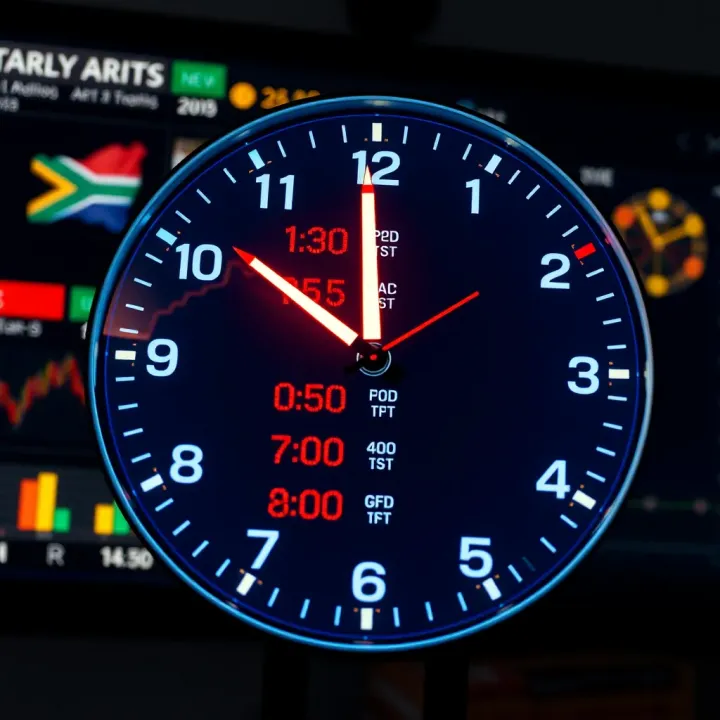
📈 Learn the key forex trading sessions impacting South African markets, understand their timing and volatility, and get practical tips to sharpen your trading strategies.
Discover how forex trading seminars in South Africa boost your skills 📍 Learn to pick the right event, understand costs, and trade smarter 💡
Based on 7 reviews