
Forex Trading in South Africa: Key Facts You Should Know
📈 Discover key insights on forex trading in South Africa! Learn about market rules, top platforms, risks, and tips to trade smarter locally. 🇿🇦💹
Edited By
Grace Thompson
Forex trading demo apps offer a practical way for South African traders to gain hands-on experience without risking actual money. These platforms simulate real market conditions, giving users a chance to understand how forex markets work and test strategies in a risk-free setup.
Most demo apps mirror live trading environments closely. For example, a South African trader using an app like MetaTrader or TradingView can follow actual currency pairs such as ZAR/USD or EUR/ZAR, with prices updating in real time. This approach helps traders learn the flow of the market and the impact of economic news, without worrying about losing capital.

Using a forex demo app has several benefits:
Practice with real data: Current market prices and spreads give realistic trading conditions.
Test strategies: You can try out different entry and exit points or risk management techniques before going live.
Build confidence: Making trades and managing a portfolio before committing real money can reduce emotional errors.
For South African traders juggling loadshedding or limited work hours, demo apps offer flexible access on mobile devices or tablets. Platforms like IG Markets and AvaTrade cater well to local users and allow switching seamlessly from demo to live accounts.
Demo accounts are more than just practice tools. They serve as educational platforms where you can refine your skills under market conditions that closely resemble reality.
That said, demo trading isn’t perfect. Slippage or execution speed can differ once you move to live trading, especially during volatile times. Furthermore, some beginners risk overconfidence from demo success and fail to recognise the psychological differences when real money is at stake.
Understanding these nuances is key for South African traders to make the most of demo apps. Later sections will break down how to pick the right demo app, features to prioritise, and practical tips to transition smoothly to live forex trading.
Forex trading demo apps are basically practice platforms that let you trade currencies in a simulated environment without using real money. Think of it like a flight simulator for pilots – you get to handle all the controls and scenarios but without the risk of crashing a plane. For South African traders, this means you can learn the ropes of forex trading without the pressure of losing actual Rand, which is a massive relief when you’re still figuring things out.
A forex demo app recreates the foreign exchange market using virtual funds and real or near-real-time market data. This means you get to see live price movements and execute trades just like you would on a real platform, but none of your money is on the line. For example, if the US Dollar is strengthening against the Rand, the app will reflect that change, allowing you to practise buying or selling USDZAR pairs as though it were real.
This setup provides a hands-on experience that’s way more effective than just reading about forex or watching videos. You’re able to understand how market dynamics affect your positions directly, which is especially handy if you want to grasp concepts like spread, leverage, and margin calls before committing real cash.
The standout benefit is the chance to trade without risking your savings. It’s like having a safety net – if you mess up, you just try again without any financial fallout. For instance, say you try out a high-leverage position; in a live setting that could wipe out your account rapidly, but with a demo app, you’ll learn the consequences without paying the price.
You also get to experiment with different trading hours, currency pairs, and market events without worrying about losses. This type of risk-free environment is crucial for building confidence, especially with volatile pairs like USDZAR where local economic news can trigger sharp moves.
Whether you’re new to forex or a seasoned trader, demo apps serve as a practical classroom. Beginners can get familiar with how currency prices fluctuate, how to place orders, and how to read charts. An example would be navigating through the MT4 or MT5 platform – these are favourites in South Africa and come with many demo versions for practise.
Even experienced traders use demo accounts to refresh their knowledge or learn about new instruments. A local trader might try different strategies involving emerging market currencies or commodity-linked pairs like ZAR vs USD, brushing up on concepts without risk.
One of the smartest uses of demo apps is strategy testing. You might hear about a new trading method online, but jumping straight into live trading can be costly. Demo accounts let you trial these strategies through different market conditions to see if they hold up.
For example, testing a scalping strategy during volatile periods caused by South African Reserve Bank announcements, or checking how a carry trade performs when interest rates change. If the tactic doesn’t work, you can tweak or ditch it without blowing up your account.
Forex platforms can be complex beasts, full of buttons, graphs, and jargon. Demo apps give you the chance to explore these tools fully – from placing stop-loss orders to setting alerts and analysing technical indicators.
For South African traders, getting comfortable with platforms like MetaTrader, cTrader, or broker-specific apps means smoother transitions when moving to real accounts. This familiarity reduces costly errors and helps you trade more confidently. It’s a bit like getting the feel of a bakkie before hitting the rough roads.
Demo apps aren't just for newbies; even veteran traders gain value by refining their skills and testing new ideas without risk. They’re a vital part of building a strong foundation in Forex trading.
Overall, forex trading demo apps offer a safe, practical space to learn, experiment, and prepare before committing real funds. For South Africans mindful of every rand, this risk-free learning ground is a must-have stepping stone in your trading journey.
Choosing the right forex demo app means looking beyond just the flashy interface. For South African traders, the app’s key features can make the difference between a useful practice space and a waste of time. These features influence how closely the demo experience matches real market conditions, how easily you can use the platform, and how much you’ll learn while practising.
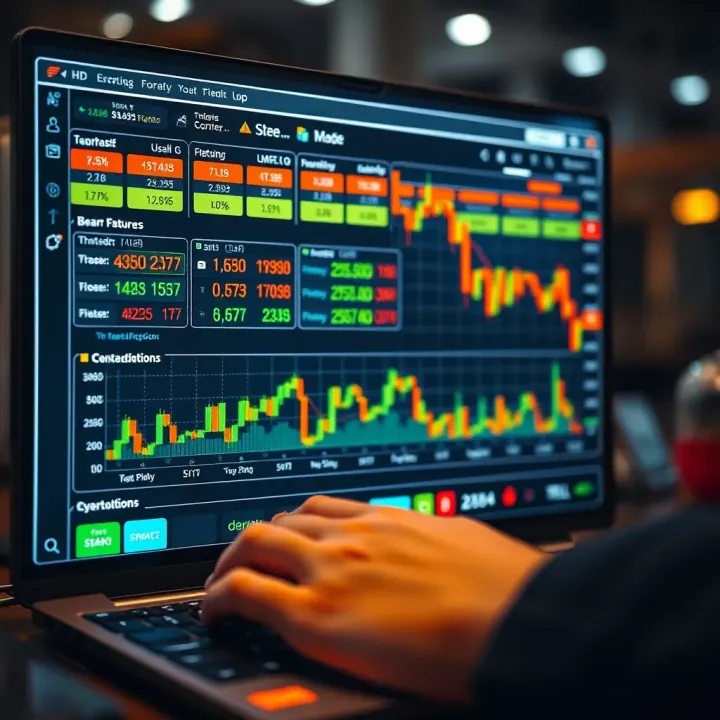
A demo app should offer live price feeds, reflecting actual market rates at the moment. Some apps, however, use delayed data by a few minutes or more, which can lead to misleading signals about market movements. For instance, if an app shows a delayed price of the USD/ZAR pair, you might get an outdated rate that doesn’t correspond to the real market, making your trades less effective when you switch to live.
Using live feeds helps mimic real trading environments, giving you a sharper sense of market timing and volatility. This realism is especially important during volatile periods, such as when SARB announces interest rates or amid global events affecting emerging markets.
Even in a demo setting, the speed at which your orders execute matters. A slow or laggy execution can frustrate users and create a false impression of market behaviour. Quick execution means your buy or sell requests reflect how they’d perform on a live account — which is vital when practising scalping or day trading.
For South African traders, low latency execution helps practise strategies that rely on tight spreads and fast reactions. If the demo app takes seconds to place trades, it won’t prepare you for the split-second decisions needed in active forex markets.
South Africans access apps through different devices based on convenience and lifestyle. While desktop platforms offer more space for charting and analysis, mobiles provide flexibility for trading on the go, especially with spotty connections or during commutes.
A good demo app should have both versions with consistent features. For example, a trader might start planning trades at the office on a desktop, then monitor and adjust positions via mobile while stuck in traffic or at a braai. Ensuring you’re comfortable on both platforms helps prevent surprises when transitioning to live accounts.
The trading platform should be intuitive, allowing you to find tools and place trades without hunting through cluttered menus. Complicated navigation breaks focus and eats time, especially for beginners.
Clear layouts, logical grouping of functions, and easy access to key areas like charts, orders, and account settings help maintain momentum during practice. Apps like MetaTrader 4 and MetaTrader 5, widely used globally and supported by local brokers, are popular partly for their balance of usability and features.
While English is widely understood in South Africa, some traders prefer communications in Afrikaans or indigenous languages like isiZulu or isiXhosa. Demo apps with local language support or at least responsive customer service can ease the learning curve.
Also, quick access to help, whether via chat or email, makes a difference when you hit technical problems or need guidance. This support is crucial for newcomers learning the terminology and mechanics of forex trading.
A demo app with embedded tutorials saves time hunting YouTube or websites for beginner tips. These guides should cover basics like reading forex quotes, setting orders, and understanding leverage.
For example, at the start, some demo apps prompt users through a quick setup tutorial, explaining how to place their first trade. This hands-on approach builds confidence more effectively than dry manuals.
Access to robust charting and technical indicators enables traders to analyse price movements and develop strategies while practising.
Indicators such as moving averages, RSI (relative strength index), and Bollinger Bands should be available to mimic real trading setups. South African traders familiar with Johannesburg Stock Exchange (JSE) charting tools will appreciate having similar features here.
Risk management is key in forex trading, so demo apps should let you practise setting stop-loss and take-profit orders. Some also include position size calculators and alerts when trades approach your risk limits.
This practical experience helps develop discipline around controlling losses and locking in profits before stepping into the live market, especially needed given the volatile nature of currency pairs like USD/ZAR or EUR/ZAR.
Looking for well-rounded features in a forex demo app gives you a closer taste of real trading conditions and sharpens your skills before risking your Rand. Without these elements, practising can feel disconnected from actual market challenges.
Picking the right forex demo app matters a lot for South African traders. It’s not just about getting a free tool to play around with—your choice affects how well you understand market movements, build confidence, and eventually step into live trading without unnecessary surprises. Since the forex scene in South Africa has its own regulatory landscape, device preferences, and cost concerns, a demo app tailored to these needs will serve you better in the long run.
South African traders should prioritise demo apps offered by brokers regulated under the Financial Sector Conduct Authority (FSCA). This regulatory body ensures brokers follow strict rules to protect traders' interests. For instance, FSCA-compliant brokers must keep client funds separate from operational money and provide transparent pricing. Using a demo app linked to such a broker gives you peace of mind that the trading environment reflects fair, legal practices.
Besides regulation, broker reputation counts. Look for brokers with a solid track record both locally and internationally. For example, well-known names like IG Markets, Plus500, or local outfits with FSCA approval tend to maintain reliable platforms and good customer service. Avoid lesser-known brokers with sketchy online reviews or unclear licensing. Your demo experience can suffer if the broker’s platform is unstable or data reporting is inaccurate.
Many brokers provide free demo accounts without hidden fees, which is a boon for traders starting out. These accounts let you practise unrestricted for weeks or months, sometimes with virtual funds up to R1 million, which gives plenty of room to experiment. Always double-check that the demo truly costs nothing—some platforms might slip in charges for certain advanced features or account top-ups.
Mobile data usage is another factor. South Africa’s data costs can add up, especially if you’re using mobile networks for trading on a bakkie or during downtime. Demo apps that efficiently balance real-time price updates without gobbling excessive data are preferable. Apps that let you customise data refresh rates or use compressed market feeds help keep your monthly data bill reasonable.
Most South African traders rely heavily on Android mobile devices, but iPhone users represent a sizeable group too. A good forex demo app must support both Android and iOS, ensuring you can practise from your preferred device without hiccups. For instance, apps from brokers like HotForex or XM tend to perform well across both platforms and frequently update to keep pace with the latest operating systems.
Integration with popular forex platforms such as MetaTrader 4 (MT4) and MetaTrader 5 (MT5) is critical. Many South African traders prefer these platforms because of their user-friendly interface, strong technical analysis tools, and vast community support. Demo apps connected to MT4 or MT5 offer a smoother transition to live accounts on the same platform, avoiding unnecessary relearning curves.
Choosing a demo app that meets your regulatory, financial, and technological needs will put you on the right track for practising effectively and moving confidently into real forex trading.
Using a forex trading demo app goes beyond just clicking buttons and watching charts. To truly benefit, you need to develop strategies, manage risks, and understand the limits of the demo environment. This section breaks down how you can get the best out of your practice time before moving to live trading.
Tracking performance over time helps you see whether your strategies actually work. Keeping an eye on how your trades perform over days or weeks can reveal patterns — perhaps your entry timing needs tweaking, or you notice consistent losses during certain market hours. For example, a trader using a demo app on MT4 might log their results in a spreadsheet to spot trends or errors. This practical feedback loop is vital in refining your approach.
Adapting to changing market conditions is another skill demo trading teaches. The forex market shifts constantly due to news, economic data, and geopolitical events. By practising on a demo app, you get used to adjusting your strategies when the rand weakens against the US dollar after a SARB announcement. Such flexibility prevents rigid trading habits that could cost you when real money is involved.
Setting stop-loss and take-profit levels protects your capital when the market moves against you or hits your target. Most demo apps allow you to practise placing these orders. For instance, if you buy EUR/ZAR at 18.50, you could set a stop-loss at 18.40 to limit losses and a take-profit at 18.75 to secure gains. Repeating this on a demo account helps you get comfortable with how these tools work under pressure.
Managing position sizes stops you from risking too much at once. Demo apps let you experiment with various lot sizes to see how much margin you need and how profits or losses scale. For example, trading a large position in USD/ZAR without proper sizing could rapidly drain your funds in a live scenario. Learning to adjust sizes in the demo phase keeps you grounded and cautious.
Psychological differences from live trading often catch traders off guard. There’s minimal emotion involved when you’re not risking real money, meaning decisions might be looser or overly daring. When you eventually trade live, emotional factors like fear or greed can affect your choices, which a demo app won’t fully prepare you for.
"Remember, the sweat and stress of live trading aren’t captured in a demo, so don’t assume results will transfer exactly."
Potential execution discrepancies include slower order fills or slippage during volatile markets, which demo accounts generally don’t simulate. For example, a demo app might instantly execute your sell order on GBP/ZAR at your chosen price, but a live market order might fill lower during sudden price swings. Understanding this helps set realistic expectations and signals the need to be extra alert when going live.
Making full use of your demo app means treating it like a rehearsal—not the main show. Using it to sharpen your skills, build discipline, and prepare for real market challenges is the best way to sharpen your edge in forex trading within the South African context.
Using a forex trading demo app is a smart way to learn, but traders often fall into avoidable traps that can hurt their progress. Spotting these common pitfalls early on helps you build realistic expectations and develop practical skills before trading with real money. It's especially relevant for South African traders who face unique market conditions, such as local spread variations and data costs.
Demo apps often provide an idealised trading environment, which can lead to overconfidence. Remember, the platform might not capture the emotional pressure or real-world consequences of trading actual funds. For instance, you might rack up consistent profits on a demo and wrongly assume you’ll replicate the same success live. This mismatch can cause you to take bigger risks when you go live, possibly wiping out your capital quickly.
To adjust your expectations, treat demo profits with a grain of salt, and focus more on the process than the result. Set realistic goals, such as mastering order entry and timing rather than chasing huge returns. That approach prepares you mentally for the live market’s ups and downs, making the transition smoother.
Real markets are fluid, often behaving unpredictably with sudden price swings and slippage — when your trade executes at a different price than expected. Many demo apps don’t fully simulate this, masking the challenges you’ll face with live trading. For example, during high-impact news releases, South African traders might notice rapid price changes and wider spreads that your demo never showed.
Understanding this gap is crucial. Don’t assume your demo results reflect real market conditions. Always monitor economic calendars and be ready for volatility, especially because South Africa's market might react to global events while also influenced by local factors like Eskom’s loadshedding or political developments.
It’s easy to stick to basic functions in a demo app and miss out on learning all its tools. Overlooking charting indicators, risk management settings, or order types can leave you struggling when you switch to live trading. Imagine not knowing how to place a stop-loss quickly during a sudden price drop — it’s a costly blunder.
Take time to explore every feature thoroughly. Test placing different order types and using indicators or alerts provided by your chosen app. This hands-on experience helps avoid surprises that could disrupt your trading flow or lead to avoidable losses once you go live.
Getting comfortable with the demo app’s full range of tools not only boosts your confidence but can also save your skin when real money is on the line.
By steering clear of these pitfalls, you make your demo trading genuinely useful, providing a strong foundation for success in the live forex market.
📈 Discover key insights on forex trading in South Africa! Learn about market rules, top platforms, risks, and tips to trade smarter locally. 🇿🇦💹

📊 Explore a hands-on guide to forex trading in South Africa! Learn key strategies, market rules, risks, and how to trade smart from the start. 💰

Find the best forex trading app for South Africa 🇿🇦! Compare features, security, costs & regulations to pick the perfect fit for your trade goals 📈💼

🔍 Find the perfect trading app in South Africa by comparing features, security, fees, ease of use, and local support to trade smart and safe.
Based on 12 reviews