

Understanding Gender Binary and Its Impact
Explore the gender binary's roots, its social effects, and diverse views from South Africa and beyond 🌍 Understanding beyond traditional labels.
Edited By
Chloe S. Bennett
Binary coding forms the backbone of how modern digital devices operate. At its core, it’s a system of representing information using just two symbols: 0s and 1s. This simple method underpins everything from how your mobile phone handles calls and text messages to how financial markets process transactions.
In essence, binary coding translates complex data into patterns of bits—the smallest units of data. Each bit carries a value of either zero or one. When combined, these bits create larger units like bytes, which computers use to store and manipulate information.

Understanding how binary coding works is fundamental for traders, investors, analysts, brokers, and educators alike, as technology increasingly shapes financial markets and communication channels.
The idea of using a two-symbol system isn’t new; it dates back centuries. Gottfried Wilhelm Leibniz, a 17th-century mathematician, popularised the binary numeral system to simplify calculations. Later, this system was adapted for electronic computing, where the physical states of components—like transistors switching on or off—naturally reflect binary's zeros and ones.
Data encoding involves converting letters, numbers, images, or sounds into binary form. For example, the letter 'A' is represented in the ASCII (American Standard Code for Information Interchange) system as 01000001. Once encoded, computers can process or transmit this information efficiently. Decoding reverses this process, translating binary back into human-readable formats.
Binary coding isn’t limited to computers alone. It serves critical roles in digital communication, including internet data packets and secure financial transactions. For instance, secure trading platforms rely on binary encryption to protect user data during online trades.
Moreover, error detection methods like parity bits or checksums use binary principles to ensure transmitted data isn’t corrupted—vital for fast-paced stock exchanges where accuracy is non-negotiable.
Understanding these fundamentals allows professionals in finance and education to grasp how technology influences market operations and data security. This background equips them to better evaluate systems dependent on binary coding and make informed decisions within their fields.
Binary coding underpins the digital world we engage with daily, from smartphones and laptops to the complex systems supporting trading platforms and financial analysis tools. Understanding binary coding helps demystify how devices process vast amounts of data quickly and reliably. In straightforward terms, binary coding uses just two symbols—0 and 1—to represent and manipulate data, offering a simple yet powerful system that computers rely on.
At its core, binary code is a language made up of bits, where each bit is either on (1) or off (0). These bits group into bytes—usually eight bits—to encode everything from numbers and text to images and sound. For example, the letter "A" in text files is generally represented as 01000001 in binary, allowing computers to store and interpret it consistently.
The advantage of using just two states relates to hardware simplicity and accuracy. Electronic circuits find it easier to detect two clear voltage levels, reducing errors amid electrical noise. This dual-state setup means binary coding forms the backbone of nearly all digital systems, whether you're checking stock prices or running complex algorithms on the JSE.
The journey of binary coding began long before modern computing. In the seventeenth century, mathematician Gottfried Wilhelm Leibniz formalised the binary system, inspired by the I Ching, an ancient Chinese text. His work showed how all numbers could be expressed using just zeroes and ones.
Moving forward to the twentieth century, Claude Shannon's groundbreaking research in 1937 demonstrated how binary logic could optimise electrical circuits, laying groundwork for digital computing. By the mid-1900s, binary code became the standard for programming early computers like the ENIAC.
Today, binary coding’s evolution continues, feeding into innovations like quantum computing and advanced encryption methods. But the principle remains the same—representing information through straightforward patterns of zeroes and ones to reliably process and store data.
Binary coding might seem abstract, but it’s a practical tool enabling the devices and systems that keep modern life moving, especially for sectors reliant on fast and accurate data processing.
Understanding these fundamentals equips traders, investors, analysts, and educators alike to grasp why binary remains essential despite technological changes, setting a firm foundation for deeper exploration into digital technology's practical applications.
Understanding the foundations of binary systems is key to grasping how digital technology functions at its core. Binary, using just two digits — zero and one — forms the language that computers read and process. This simplicity makes it robust and reliable, especially in environments where exact data representation and error-free communication are vital, such as financial trading platforms or data-intensive analyses.
At its simplest, the binary number system represents values using two symbols: 0 and 1. Each digit in a binary number is called a bit. These bits relate to powers of 2, much like digits in the decimal system relate to powers of 10. For example, the binary number 1011 equals 11 in decimal: it's calculated as (1×2³) + (0×2²) + (1×2¹) + (1×2⁰).
This binary structure allows seamless representation of data in digital systems. For instance, stock prices stored in computer systems are converted into binary for accurate processing. Even complex financial models running on computers rely on this base-2 system for computations, ensuring precision and consistency.

Practical understanding of converting between binary and decimal numbers is essential, especially when analysing raw data or troubleshooting digital systems. To convert binary to decimal, multiply each bit by its corresponding power of 2 and sum the results. Conversely, to change a decimal number to binary, repeatedly divide the number by 2, recording the remainders until you reach zero; these remainders build the binary equivalent starting from the least significant bit.
For example, converting decimal 18 to binary involves dividing by 2 twice until zero:
18 ÷ 2 = 9 remainder 0
9 ÷ 2 = 4 remainder 1
4 ÷ 2 = 2 remainder 0
2 ÷ 2 = 1 remainder 0
1 ÷ 2 = 0 remainder 1
Reading the remainders backward gives 10010, the binary equivalent of 18.
Mastering these conversions helps traders and analysts interpret data outputs correctly, especially when interfacing directly with systems that present information or errors in binary form.
Overall, the binary number system and its conversion processes form the bedrock upon which modern computing and digital communications rest. A firm grasp on these fundamentals arms professionals with practical skills to navigate technical challenges and understand the technology driving their industries.
Encoding information with binary is the backbone of all digital devices and systems. Binary code—the sequence of zeroes and ones—translates everyday information into a form that computers and gadgets can process, storing everything from simple text messages to complex multimedia files. This encoding is essential because digital infrastructure fundamentally operates through on/off or high/low voltage signals, representing these as 0s and 1s. Understanding how various types of data are encoded helps demystify what happens behind the scenes every time you send an email or stream a video.
Text representation in binary relies mostly on standards like ASCII and Unicode. ASCII (American Standard Code for Information Interchange) was the early go-to system. It assigns a unique 7- or 8-bit code to cover common English characters, digits, and control symbols, which means characters such as ‘A’ or ‘1’ have specific binary equivalents like 01000001 and 00110001 respectively. However, ASCII's limitation is its narrow character set, mainly fit for English and a few symbols, which quickly became a problem in our global, multilingual world.
Unicode emerged as the solution, offering a much broader range of characters to include virtually every written language, alongside emojis and special symbols. This standard uses different encoding formats like UTF-8, which is backward-compatible with ASCII but can represent characters with multiple bytes as needed. For traders and analysts working in global markets, being able to accurately transmit names, places, and special financial symbols from various languages matters a lot, and Unicode ensures this consistency.
Binary encoding for numbers varies depending on the type and range of numbers involved. Integers are usually stored in fixed-size binary strings using formats like signed or unsigned integers. For example, an 8-bit unsigned number can represent values from 0 to 255, while a signed one can hold negative numbers too, through a method called two's complement.
Floating-point numbers, which traders often see in share prices or currency exchange rates, use a more complex binary format based on the IEEE 754 standard. This allows representation of real numbers with decimals but introduces challenges like rounding errors that systems try to manage carefully.
Binary also encodes other data types such as Boolean values (true/false), timestamps, or even structured data, all tailored to how the specific system processes and interprets these bits. Understanding these distinctions matters when dealing with databases or financial software that stores and manipulates data extensively.
Images and sounds don’t translate directly into simple text or numbers but rely on binary encoding to break down complex media into manageable units. Images, for example, are usually turned into pixels, each with colour values represented in binary. Common formats like JPEG or PNG compress this binary data to reduce file size while keeping visual fidelity.
Sound uses similar principles: audio waves are sampled at intervals, converted into binary numbers that represent the wave’s amplitude at a given point. Formats like MP3 or WAV use different compression and encoding schemes to balance quality and file size.
For users streaming media on platforms like YouTube or listening to music on a mobile device, understanding this binary encoding process helps appreciate why network bandwidth, hardware capability, and file formats affect the experience. It also impacts how analysts approach digital asset management or media-related investments.
Encoding information in binary lets diverse data—from text and numbers to images and audio—be handled consistently by digital systems, making it vital to modern technology and commerce.
Binary code forms the foundation of practically all modern digital technology. Whether in a desktop PC, a smartphone, or network infrastructure, binary underpinning makes these devices function smoothly and reliably. Understanding how binary translates into usable technology can clarify why it's indispensable even for complex applications.
Computers interpret binary as the core language for processing information. At the most basic level, all instructions, calculations, and data come down to sequences of zeroes and ones. The processor reads these binary commands through electrical impulses: a charged circuit means "1", while an uncharged circuit means "0". For instance, when you type on a keyboard, each keystroke converts into a unique binary code that the system recognises and processes to display letters.
This binary logic extends to operations like arithmetic calculation and logical comparisons, enabling computers to perform complex tasks quickly. The reliance on binary reduces ambiguity in digital circuits, preventing errors that could happen if more symbols were used.
In networking, data travels as binary signals over various media — fibre optics, copper cables, or wireless waves. These zeroes and ones encode all forms of communication, from internet browsing to video calls. A simple example is sending an email: your message is converted to binary, transmitted across servers and networks, then reconstructed for the recipient.
Protocols such as TCP/IP define how binary packets should be structured and managed to ensure they reach the correct destination intact. Error detection methods complement this, guarding against data corruption during transmission. Thus, binary coding underpins the vast, interconnected web of digital communication we rely on daily.
All data storage devices depend on binary encoding to save and retrieve information. Whether it's a hard drive, solid-state drive (SSD), or flash memory card, data is stored using tiny magnetic or electrical states representing either a 0 or 1. For example, a typical 1 TB hard drive holds roughly 8 trillion bits of information, each bit either a 0 or 1.
Modern devices supplement this with error correction codes to maintain data integrity. Without binary encoding and these safeguards, storing large volumes of digital content like documents, photos, and videos would be inefficient or unreliable.
Binary code may seem simple, but it is the invisible engine powering everything from your favourite apps to global financial trading platforms. Its practical application touches every aspect of today's technology landscape.
Understanding how binary coding intersects with practical technology arms investors, analysts, and educators with insight into the mechanics behind digital innovation and infrastructure. It demystifies technical jargon and suggests why certain systems perform better or face specific limitations.
In digital systems, maintaining accuracy in binary data ensures that information transferred or stored remains true to its original form. Because computers rely on binary sequences—strings of zeros and ones—to represent data, any error during transmission or storage can cause distortion, loss, or misinterpretation of that data. For traders, investors, analysts, and educators who depend on reliable digital information, the integrity of this binary data is non-negotiable. Whether it's a financial transaction, market data feed, or sensitive analysis file, safeguards against errors are vital.
Parity Bits play a straightforward but effective role in catching errors with minimal overhead. Essentially, a parity bit is an extra binary digit added to a group of bits to make the total number of ones either even (even parity) or odd (odd parity). When data is received, the system counts the bits again to check parity. If the count doesn't match the expected parity, an error has occurred. This technique is commonly used in memory systems and simple communication protocols, especially where errors are rare and resources limited.
Checksums take error checking a step further by summarising a block of binary data into a single value through a calculated sum. This sum is transmitted alongside the data. Upon receipt, the system recalculates the checksum and compares it to the sent value. A mismatch signals that corruption took place during transmission. Financial institutions often use checksum algorithms to verify the correctness of account numbers or transaction data before processing, thus preventing incorrect payments or data breaches.
Cyclic Redundancy Checks (CRC) are more robust and can detect more complex errors. Instead of simple addition, CRC treats the data as a large polynomial and divides it by a predetermined generator polynomial. The remainder forms the CRC code sent along with the data. Upon arrival, repeating the division checks if errors affected the content. CRC is widely used in network communication protocols, hard drives, and DVDs to ensure data integrity amid noisy or unreliable channels. For example, when streaming live market prices on an MTN or Vodacom network, CRC helps maintain continuous and correct data flow, reducing glitches or freezing.
Data integrity is the foundation for trust in digital systems. Without it, decisions based on corrupted or inaccurate data can lead to financial loss, misinformed strategies, and operational disruptions. For instance, traders using incorrect price feeds could execute bad trades costing thousands. More broadly, maintaining data integrity safeguards information confidentiality and system reliability in a South African context where connectivity issues and occasional power outages (loadshedding) can increase error chances.
Ensuring accurate binary data means not just reacting to errors but actively preventing them through sound system design and ongoing validation.
Overall, implementing error detection and correction techniques is essential to uphold the reliability of binary data in our digitally driven world. These measures provide peace of mind and practical benefits across various sectors, from stock trading platforms to educational tools and beyond.
Exploring the future of binary coding sheds light on how the foundation of zeros and ones continues evolving amid new technologies and alternative systems. As digital demands grow, understanding these future trends helps traders, investors, and analysts anticipate shifts that may impact tech industries, data security, and computing efficiency. This section outlines key advancements and their practical implications.
Quantum computing represents a significant leap from classical binary-based systems. Instead of bits limited to either 0 or 1, quantum computers use quantum bits or 'qubits', which can exist in multiple states simultaneously through superposition. This enables them to process complex calculations faster than traditional binary devices.
For practical purposes, quantum computing holds promise in areas such as cryptography, optimisation problems, and drug discovery. For example, banks and financial institutions could use quantum algorithms to detect fraud more efficiently or optimise complex investment portfolios, a considerable step up from conventional binary computing.
Beyond binary, ternary systems use three possible digit values per unit, typically 0, 1, and 2. This approach can reduce the number of digits needed to represent data, improving storage density and potentially lowering hardware complexity. Certain experimental processors, like Soviet-era Setun computers, were early attempts to use ternary logic.
While not widely adopted, ternary and other base systems challenge the binary norm by offering alternative architectures that might suit specific computing tasks better. For investors and tech analysts, it’s worth noting that companies exploring non-binary logic could disrupt standard computing performance metrics or reshape device designs.
Binary coding remains the backbone of technologies advancing today, from artificial intelligence and blockchain to Internet of Things (IoT) devices. Each relies on efficient, reliable binary data processing to function correctly.
For instance, in blockchain, binary code ensures secure, tamper-proof records across networks, bolstering trust in digital transactions. In AI, binary-based machine learning algorithms process massive data sets to deliver accurate predictions or automation. Meanwhile, IoT devices depend on compact binary instructions to communicate and operate within limited power and bandwidth.
The ongoing relevance of binary coding, even as new technologies emerge, shows its endurance as a versatile and robust method for representing information.
Sectors like finance and education must keep track of these developments to understand potential impacts on data management and technology investments. A clear grasp of future trends in binary coding will help stakeholders make informed decisions and spot opportunities as digital transformation gathers pace.
Explore the gender binary's roots, its social effects, and diverse views from South Africa and beyond 🌍 Understanding beyond traditional labels.

Explore how binary systems power the World Wide Web 🌐, decode digital communication 🔢, and support modern computing technology 💻 in daily internet use.
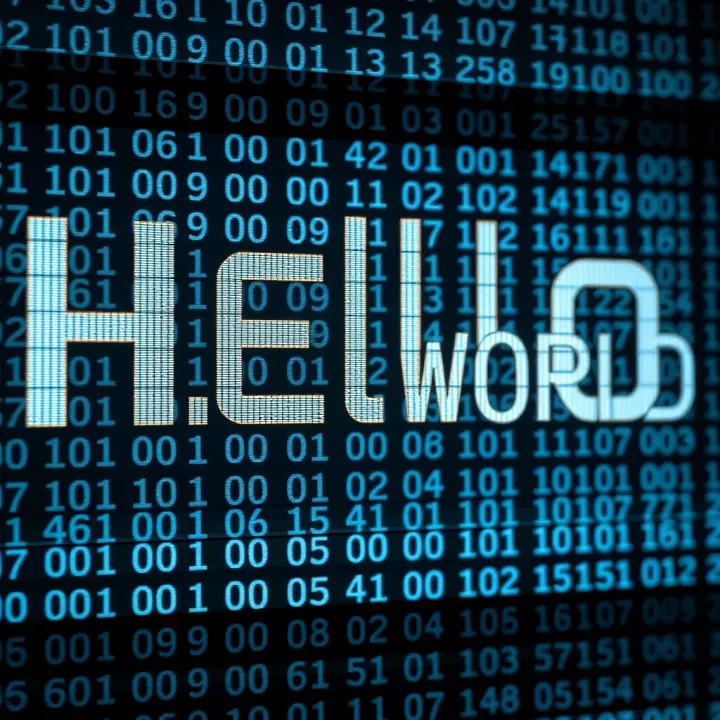
🔢 Curious how "Hello World" converts to binary? Explore ASCII encoding & text processing with practical examples to see computers speak in ones and zeros! 💻
🔍 Explore Gray code basics, practical uses, and step-by-step conversion to binary. Understand differences with binary code & its role in digital systems.
Based on 11 reviews