

Understanding Gender Binary and Its Impact
Explore the gender binary's roots, its social effects, and diverse views from South Africa and beyond 🌍 Understanding beyond traditional labels.
Edited By
Emily Parker
Binary options indicators promise sharp insights into market movements, often flaunting accuracy rates as high as 95%. For traders in South Africa – where markets can be volatile and data access variable – understanding what really lies behind these claims is key before putting real money on the line.
These indicators use mathematical formulas and historical price data to signal upcoming price direction shifts in binary options trading. They might be based on trends, momentum, volume, or volatility measures. But the figure of 95% accuracy rarely means what it appears at face value.
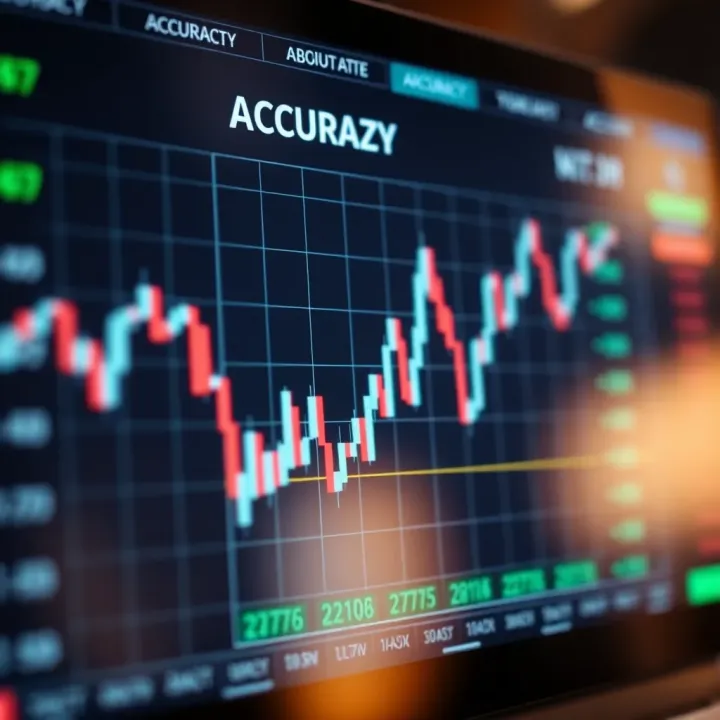
Claiming 95% accuracy typically refers to the indicator's behaviour under very specific conditions or over limited periods, not guaranteed outcomes in everyday trading.
For example, an indicator might correctly predict market direction 95% of times in a back test during a stable sideways market but falter badly in trending or volatile phases. Markets rarely behave consistently like textbook cases.
Indicators process existing price action, generating signals like "buy" or "sell" based on predefined rules.
They do not foresee future market events such as sudden news or economic changes.
Combining several indicators designed to confirm one another's signals can improve confidence but not certainty.
South African traders should approach these accuracy claims cautiously. Indicators are tools, not fortune-tellers. Best practice includes:
Testing indicators thoroughly using demo accounts or past market data relevant to local conditions.
Combining indicator signals with sound risk management — such as setting stop losses and sizing trades properly.
Avoiding reliance on any single indicator or accuracy claim without corroborating evidence.
Overtrading based purely on indicator signals without regard for broader market context.
Ignoring spreads, commissions, and execution delays which reduce real profitability despite apparent indicator accuracy.
Mastering binary options trading requires more than chasing perfect indicators. Incorporating them as part of a broader strategy involving fundamental analysis, market sentiment, and disciplined money management offers a far better chance of consistent results.
In subsequent sections, we'll break down specific indicators often marketed with 95% accuracy and explore how you can approach them realistically within South Africa’s trading environment.
Binary options indicators play a significant role for traders aiming to predict short-term price movements. They offer clues derived from historical and real-time market data to help traders make informed calls on whether an asset’s price will rise or fall within a set timeframe. For those involved in binary options trading, understanding these tools is crucial because decisions are all-or-nothing — you either win a fixed payout or lose your stake.
Binary options trading involves betting on the direction an asset will move by a specific expiry time. Unlike traditional trading, where profits depend on how much price moves, binary options pays a predetermined prize if the prediction is correct. For instance, if a trader believes the price of gold will be higher in 30 minutes, they place a "call" option. If gold's price indeed rises after 30 minutes, the trader makes a profit, typically between 60% and 90% of the stake.
This simplicity attracts many newcomers, but the quick expiry times and all-or-nothing results mean risks are high. The game relies heavily on timing and accurate prediction, making the indicators a vital part of the process.
Indicators act like signposts on a road trip, offering directions based on past and current market behaviour. They crunch numbers on price, volume, and other factors to signal possible trends or reversals. Unlike guessing, indicators help traders cut through the noise by providing data-driven insights.
For example, a moving average crossover might hint that the market momentum is shifting, prompting a trader to consider a "put" or "call" option accordingly. By combining several indicators, traders aim to reduce false signals, improving their chances of predicting the market correctly.
These indicators show the direction and strength of a market's movement. Moving averages are popular here — they smooth out price swings to highlight the underlying trend. If the asset price is above its moving average, it usually points to an upward trend, signalling buying opportunities.
The Average Directional Index (ADX) is another example used to measure trend strength without indicating direction. A rising ADX above 25 typically means a strong trend, whether up or down. Trend followers are especially useful in markets showing clear direction over the trading period.
Oscillators focus on measuring market momentum by fluctuating between set values to identify overbought or oversold conditions. Popular ones include the Relative Strength Index (RSI) and Stochastic Oscillator. These tools are handy when markets are range-bound or moving sideways, signalling potential reversal points.
For instance, an RSI reading above 70 often suggests an asset is overbought and may soon drop, while below 30 indicates oversold conditions and a possible bounce back. Oscillators help binary options traders spot entry points where the price is likely to change direction soon.

Volume indicators assess the strength behind price moves by analysing trade volume—the number of contracts or shares traded. A rising price on high volume often confirms the trend's strength, whereas price movements on low volume can be suspect.
The On-Balance Volume (OBV) indicator adds or subtracts volume based on daily price changes, helping traders gauge if volume supports a price trend. In binary options, volume indicators can offer early warnings when a trend is losing steam, helping traders avoid false signals.
Knowing how different indicators work and when to apply them equips traders with better tools to tackle the fast-paced world of binary options trading. Combining their strengths fosters more informed, realistic trading decisions rather than mere guesswork.
Claims of 95% accuracy in binary options indicators grab attention for good reason. Many traders look for reliable tools to sharpen their decision-making and improve profits. However, it’s vital to understand what this 95% actually means in practice—and how it impacts your trading strategy. This section breaks down the concept into clear parts, helping you see beyond bold marketing claims to what really matters.
An indicator boasting 95% accuracy suggests that it correctly predicts price direction in 95% of cases over a specific timeframe. But accuracy alone doesn’t guarantee profit. For example, if the payout on a successful trade is less than the loss when wrong, even high accuracy might not cover losing trades. This is common in binary options where payout ratios vary widely.
Consider a situation: the indicator fires 100 signals, gets 95 right, but the payout for each win is R80 while losses cost R100. Despite high accuracy, you’d still lose money overall. Thus, focusing solely on accuracy hides essential details like risk-reward ratios and trade management.
Accuracy can also fluctuate with market conditions. In volatile markets—like during important economic announcements or unexpected events—price swings become erratic. Indicators tuned to calmer markets might give false signals, dropping accuracy.
For instance, during Eskom load shedding affecting business hours, market participation can thin out, causing unpredictable price moves. An indicator claiming steady 95% accuracy won’t maintain that without adjustments for volatility. Traders need to understand these limits to avoid overconfidence when the market shifts suddenly.
Backtesting involves running an indicator’s signals against historical market data to gauge past performance. It’s a practical way to check if a 95% accuracy claim holds water. For example, testing an indicator on the JSE’s most active stocks over the past year can reveal how often it predicted price direction right.
Keep in mind, results depend on the quality and period of data used. A tight backtest on bullish markets will look better than one spanning varied conditions. Also, parameters like trade expiry times in binary options must match trading realities during backtesting.
Several issues can mislead traders about an indicator’s true effectiveness. One common trap is selective reporting, where only the best-performing periods or setups are shown. Another is ignoring the impact of transaction costs or slippage, which erode returns in real trading.
Additionally, confusing 'hit rate' (just winning trades) with overall profitability can cause false impressions. Consider an indicator that generates many small winning trades but occasional big losses—the raw accuracy might look strong, but results tell a different story.
Always scrutinise the source of accuracy claims, test indicators in market conditions similar to your own, and combine them with solid money management to make them work effectively for you.
Understanding these nuances helps South African traders avoid common mistakes and set realistic expectations when using binary options indicators that tout 95% accuracy.
Binary options indicators claiming high accuracy may seem appealing, but understanding their limitations is key to avoiding costly mistakes. High accuracy doesn’t guarantee success because trading conditions constantly shift, influenced by factors beyond what any single indicator can predict. It’s essential to recognise these risks so that traders don’t put all their eggs in one basket and lose sight of broader changes in the market.
Unexpected news can cause sharp market moves that defy predictions from indicators, no matter how accurate they appear historically. For example, sudden announcements by the South African Reserve Bank (SARB) on interest rates can rattle the rand and associated stock prices, overwhelming signals from technical tools. Traders relying solely on indicators may fail to react appropriately and suffer losses if they ignore the impact of such news.
Similarly, geopolitical tensions or major economic data releases can disrupt trends in seconds. Indicators based on past price actions rarely factor in these surprises, so keeping an eye on local and global news is crucial. A practical approach is to combine indicator signals with event calendars or market alerts to avoid entering trades blindly when volatile events emerge.
Markets are dynamic, and what worked yesterday might flounder today. For instance, during loadshedding periods in South Africa, market liquidity often drops as traders disconnect, causing erratic price behaviour. Indicators calibrated for steady markets lose reliability during such times.
Similarly, market sentiment shifts—like fear during a crisis or exuberance in rally phases—alter price patterns, making certain indicators less effective. Keeping track of the broader economic context, like provincial lockdowns or fiscal policy changes, helps traders judge when indicator signals merit trust and when caution is wiser.
When traders rely entirely on indicators boasting 95% accuracy, overconfidence can creep in. They might ignore warning signs or override their own judgement, leading to rash decisions. Losing streaks often trigger emotional responses, which cloud clarity.
For example, a trader who blindly follows an indicator after a few wins may enter bigger trades or increase stakes without adjusting for market changes. This behaviour risks blowouts, especially under unpredictable South African market conditions such as varying liquidity or robot timings.
Indicators serve as tools but not shields against losses. Ignoring sound money management, such as setting stop-loss levels or controlling trade sizes, is a common pitfall. Even the most accurate signals can't guarantee profits if risk controls are absent.
A practical tip is to allocate only a small portion of your trading capital per option, ensuring a string of losses doesn't wipe the account. Combining well-structured money management with indicator insights helps build resilience and long-term viability in binary options trading.
No single indicator, regardless of its claimed accuracy, replaces the need for balanced judgement, risk controls, and awareness of market complexities.
By keeping these limitations and risks in mind, South African traders can approach binary options indicators critically and build strategies that stand up under real-world conditions rather than relying on optimistic accuracy claims alone.
Binary options trading in South Africa presents unique challenges and opportunities, especially when using indicators. Adapting your approach to suit local market conditions and economic factors can make a real difference in trading success. Traders can benefit significantly by combining indicators with solid strategies and by navigating South Africa-specific risks, such as loadshedding.
Using multiple indicators to confirm signals helps reduce false positives and improves decision-making. Instead of relying on a single signal, traders often combine trend-following indicators like moving averages with oscillators such as the Relative Strength Index (RSI). For example, if a moving average crossover suggests an upward trend but the RSI shows overbought conditions, it might serve as a warning not to enter the trade hastily. This layered confirmation approach increases the reliability of trade signals.
Beyond signal confirmation, combining indicators allows traders to adapt to different market states. While some indicators work better in trending markets, others shine in sideways or choppy conditions. Applying the right mix helps traders adjust strategies during volatile periods common in South African markets, especially around political events or economic data releases.
Adapting strategies to local market hours is crucial for South African traders since most globally relevant binary options markets operate in different time zones. Active trading is often most profitable during overlapping active hours of major markets like London and New York. For instance, trading during London’s market open (9 am to 5 pm SAST) offers higher liquidity and clearer trends than other times.
Additionally, South African traders must consider local factors, such as market access hours of Johannesburg Stock Exchange-listed assets or commodities relevant to the region. This timing awareness ensures trades are executed during periods of meaningful price action rather than low-volatility lulls.
Choosing regulated brokers is key for safe and fairly executed trades. The Financial Sector Conduct Authority (FSCA) regulates financial services providers. Using FSCA-regulated brokers ensures compliance with South African law, which protects traders against fraud and unfair trading practices. International brokers without local regulation might present higher risks, including issues with withdrawals or unfair platform conditions.
South African traders should verify a broker’s licence details before funding accounts and be wary of platforms promising unrealistic returns or “guaranteed” 95% accuracy.
Managing risk under loadshedding conditions requires strategic planning. Frequent power outages disrupt internet connectivity and device charging, putting live trades at risk. Traders can prepare by using UPS (uninterruptible power supplies) or investing in solar-powered backup systems to maintain connectivity.
Moreover, opting for trade types with longer expiry times, rather than ultra-short options, can help reduce stress caused by sudden disconnections. Mobile trading apps with offline features or data-saving modes also offer solutions when power or data availability fluctuates.
Balancing careful indicator use with solid strategies and local awareness equips South African traders to navigate their market conditions more confidently and effectively.
Setting practical expectations for binary options indicators is vital to avoid frustration and losses. While these tools promise high accuracy — sometimes as much as 95% — no indicator can guarantee success in every trade. Markets move unpredictably, influenced by local and global factors, such as company announcements, economic shifts, and even Eskom's loadshedding schedules here in South Africa. Recognising the limitations of indicators helps traders maintain a balanced perspective and make smarter decisions.
Indicators can provide valuable insights but relying on them blindly is risky. Their performance depends heavily on market context and timing. For example, a trend-following indicator might work well during stable market phases but give false signals during sudden volatility caused by unexpected news or geopolitical developments. South African traders dealing with the inherent unpredictability of local markets should learn to treat indicator signals as suggestions rather than absolutes. This means confirming signals through multiple indicators or other analysis methods before committing funds.
Understanding the limitations of these tools also includes knowing when to step back. Overconfidence from streaks of successful trades often leads traders to ignore ongoing market changes or risk management rules. A clear acknowledgment that no strategy works all the time stops emotional decision-making that often derails portfolios.
Continuous learning and adaptation go hand-in-hand with caution. Markets evolve, and so should your approach. For instance, a technical indicator that worked well before a shift in market hours or loadshedding patterns might require recalibration or combining with fundamental analysis. Staying updated with local economic news, pay periods, and public holidays can also affect trading results.
Practically, this means keeping records of your trades and reviewing them thoughtfully to spot what’s working and what’s not. Attend local trading workshops or online forums where South African traders discuss how they tweak their strategies around unique challenges like data outages and currency fluctuations. Building flexibility into your trading ensures you’re not stuck chasing a signal that no longer fits the current environment.
Patience and adaptability often matter more than chasing a perfect indicator. Trading success typically comes from a steady approach grounded in understanding both tools and context.
By combining cautious optimism with ongoing education, South African traders can make more informed decisions, reducing the risk of losses while gradually improving their use of binary options indicators.
Explore the gender binary's roots, its social effects, and diverse views from South Africa and beyond 🌍 Understanding beyond traditional labels.

Explore why binary options are risky💸, how they work⚙️, and the ethical issues⚖️. Learn why many South African investors avoid them.

Explore how binary systems power the World Wide Web 🌐, decode digital communication 🔢, and support modern computing technology 💻 in daily internet use.

🔢 Curious how "Hello World" converts to binary? Explore ASCII encoding & text processing with practical examples to see computers speak in ones and zeros! 💻
Based on 8 reviews