
Forex Trading in South Africa: Key Facts You Should Know
📈 Discover key insights on forex trading in South Africa! Learn about market rules, top platforms, risks, and tips to trade smarter locally. 🇿🇦💹
Edited By
Charlotte Reed
Forex trading robot software, commonly known as expert advisors (EAs) or automated trading systems, are programmes designed to trade currencies on your behalf. They analyse the forex market using pre-set algorithms, placing buy or sell orders based on technical indicators without requiring constant human input.
In South Africa, where day traders and investment enthusiasts face fluctuating exchange rates and volatile global events, these tools have gained popularity. Still, they’re no magic bullet. It’s essential to understand how they operate before committing your hard-earned rand.
These systems typically scan multiple currency pairs simultaneously, executing trades faster than any human could. For example, a robot might spot a sudden price dip in the USD/ZAR pair and enter a long position automatically. This speed can be critical, especially in markets with tight margins where seconds count.
Automated forex robots can make trading less emotionally taxing, but they require careful setup and constant monitoring to avoid unexpected losses.
Key advantages include:
Consistency: Robots stick to rules, avoiding panic or greed.
Speed: React instantly to market changes.
Backtesting: You can test strategies on historical data before risking real money.
However, potential pitfalls also exist:
Strategies based solely on technical data might miss sudden economic shifts.
Poorly programmed bots can lead to rapid losses.
Over-reliance may encourage neglecting manual analysis.
For South African traders, choosing software compatible with local brokers and supporting platforms such as MetaTrader 4 or 5 is crucial. Also, check the robot’s track record under market conditions similar to those affecting the rand.
Understanding these basics helps you decide if a forex trading robot aligns with your investment style and risk appetite. Next sections will explore how to evaluate and select the right software, plus practical tips to make the most of automated trading in local contexts.
Understanding what forex trading robot software is and how it functions is fundamental for anyone considering automated trading in the forex market. These tools are designed to streamline decision-making and execution, which can reduce the manual effort traders often spend glued to screens. This section breaks down the core aspects of trading robots, helping you grasp their mechanisms and weigh their practical benefits.
A forex trading robot is a software program that automatically analyses the market and executes trades without human input once activated. Its main purpose is to monitor price movements and other market data continually, identifying and acting on predefined trade opportunities instantly. For example, a trading robot might spot a sudden dip in the USD/ZAR pair and open a buy position faster than a human could react.
The goal is twofold: to remove emotions from trading, such as fear or greed, and to capitalise on market opportunities 24/7, which can be especially useful for traders who can't watch the market during South African daytime hours.
At the heart of any forex robot lies an algorithm—a set of programmed rules and calculations—that analyses price trends, volume, indicators, and sometimes news sentiment. These algorithms are built to spot specific patterns like moving average crossovers or RSI (Relative Strength Index) thresholds to decide when to enter or exit trades. For instance, if the algorithm detects a bullish crossover on the EUR/USD pair, it may signal a buy.
This rule-based approach helps maintain consistent strategy execution, avoiding impulsive decisions that human traders often fall prey to. Despite its mechanical nature, the algorithm can adapt to various strategies, from scalping to swing trading, depending on how it’s programmed.
Once the robot’s algorithm signals a trade, it sends the order directly to your broker’s platform, all without needing you to click a button. This seamless order execution can save precious milliseconds in volatile markets where prices can shift quickly.
For example, during sudden news releases affecting the rand, a forex robot might close losing trades or secure profits immediately, preventing human delay. Of course, this requires a stable internet connection and a compatible broker platform that supports automated trading.
Fully automated forex robots handle everything: analysis, trade execution, and trade management. Once switched on, they monitor the market continuously and adjust positions based on their programmed strategy. This suits traders who prefer a hands-off approach, relying on the software to make consistent decisions.
For instance, a fully automated system could manage multiple currency pairs simultaneously, scanning opportunities across USD/ZAR, GBP/USD, and EUR/USD without fatigue or distraction. However, it's crucial to keep an eye on performance to intervene if market conditions shift drastically.
Semi-automated tools assist with some steps but still require manual input for confirmations or adjustments. For example, a robot might scan for trade setups and alert the trader, who then decides whether to proceed. This hybrid approach gives the trader more control and can reduce risks related to unexpected market conditions.
Traders who use semi-automated tools often combine automated signals with their own market insights, which can be especially handy during the South African matric results season when market volatility spikes. It’s a nice middle ground between fully automated trading and manual approaches.
Using forex trading robots can free up your time and safeguard against emotional decisions, but understanding their operation and types is key before putting your rand on the line.
Using forex trading robots brings both clear benefits and notable challenges. Understanding these helps traders set realistic expectations and use the software effectively instead of blindly relying on it. Let’s look at some specific advantages and limitations.
One of the main advantages of forex trading robots is that they apply your trading strategy consistently without emotion. Human traders often react emotionally under pressure, leading to impulsive or hesitant decisions. A robot, however, sticks to pre-set rules and executes trades precisely when conditions are met. For instance, if your robot is programmed to enter a trade when a certain moving average crossover happens, it will do so every time, no matter the market jitters.
This consistency can be crucial in volatile markets, where hesitation or fear can mean missed opportunities or losses. Yet, it’s not foolproof. The robot’s strategy must be solid and aligned with current market behaviour, or consistency simply means reliably following a bad plan.
Another practical benefit is the time saved from constant market observation. Forex markets operate 24/5, making it impractical to monitor charts and news non-stop. Robots handle this by running trades automatically, so you don’t have to sit glued to your screen.
For example, a day trader juggling a hectic schedule might use a robot to keep track of multiple currency pairs after work. This lets the robot open and close positions as opportunities arise, freeing the trader to focus on other priorities. However, remember, it’s still wise to glance at your account regularly to ensure everything is working as expected.
Backtesting is a valuable tool provided by most forex robots. It involves running your trading rules on historical data to see how they would have performed. This allows you to assess effectiveness before risking real money.
A South African trader, for example, can backtest a strategy over periods including times of high rand volatility due to SARB policy changes or geopolitical events. By doing so, they can gauge how robust the strategy might be in different market conditions. However, past performance is no guarantee for the future—markets change, so backtesting results should be just one factor in decision-making.
One pitfall with robots is over-optimisation, also called curve fitting. This happens when a robot is too finely tuned to past data, capturing noise rather than true patterns. Such a robot may boast amazing backtest results but fail miserably in live trading.
For instance, a robot tweaked endlessly to fit 2022’s forex swings may underperform now that conditions have shifted. Traders should be wary of software promising sky-high returns based on flawless backtests, as it could signal curve fitting rather than solid strategy.
Forex markets can shift rapidly due to unexpected news, political events, or economic reports. Robots programmed with fixed rules may struggle, unable to adjust quickly to changing volatility or trends.
Take, for example, a robot that trades solely on technical indicators without considering fundamental news such as SARB interest rate announcements or Eskom load shedding impacts on the rand. Sudden market swings might trigger many false signals, leading to losses. Human oversight and occasional manual intervention often remain necessary.
Reliability is critical. Software glitches, connectivity issues, or bugs can disrupt your robot’s functioning, resulting in missed trades or erroneous orders. This is particularly relevant in South Africa, where load shedding or unstable internet can interrupt trading.
One South African trader discovered his robot stopped executing trades during a sudden power outage, missing profitable moves. It underlines the importance of monitoring your trading setup and having backup plans in place to minimise downtime risks.
Forex trading robots can offer consistent, time-saving help but require solid strategies, active monitoring, and awareness of their limits to avoid costly mistakes.
Balancing these factors gives traders a better chance of making trading robots a useful part of their toolbox rather than a blind gamble.
Choosing an appropriate forex trading robot is crucial for aligning automation with your trading objectives and risk appetite. With the growing number of available options, traders must examine specific features and claims critically to avoid wasting time and money on ineffective or misleading software.
Historical data gives insights into how a forex robot has handled various market conditions over time. Rather than relying on vague claims of "high profits," look for verified performance records spanning different market cycles. For instance, some robots provide live verified accounts or third-party audits showing their actual trades and drawdowns. This transparency helps you gauge the reliability of their strategy and its adaptability to changing forex environments.
A forex robot must work smoothly with your preferred trading platform, typically MetaTrader 4 or MetaTrader 5 in South Africa. Compatibility ensures that there are no technical glitches during order execution or data feeding. For example, a robot that isn’t optimised for MT5 might miss certain trade signals or fail under complex conditions. Also consider if your broker supports automated trading fully, as some local brokers limit or restrict robot use.
Not all traders want a set-and-forget robot; many prefer some control over parameters like risk level, trade size, or stop-loss settings. A good forex robot should allow traders to tweak settings according to their comfort and strategy modifications. This flexibility comes in handy when market volatility increases or when your trading goals shift. For instance, you may want to reduce exposure during Eskom loadshedding periods when internet reliability dips.
Sellers often showcase backtesting data that looks impressive but rarely reflect real-world trading. Always seek robots with verifiable live trading results over a reasonable time frame, ideally on accounts accessible through independent services like Myfxbook. Real results reveal if a bot can handle slippage, spread changes, and unexpected market events rather than just idealised historical data.
"If you only look at backtesting results, you’re seeing just part of the story. Live verification shows whether the strategy holds up when real money is involved."
Beware of robots promoted with exaggerated claims like "guaranteed profits" or "risk-free trading". These are usually red flags. Sales pages heavy on flashy graphics and testimonials may distract from the absence of solid proof. Take time to research, ask for independent reviews, and don’t rush into buying due to pressure tactics or unrealistic bonuses.
Forums and review sites can provide valuable real-world experiences, especially from South African traders. Look beyond star ratings to read about usability, customer support, withdrawal processes, and software bugs. For instance, if multiple users report consistent bugs or issues syncing with local brokers, that’s a sign to steer clear. Genuine feedback balances hype with practical insights.
Selecting the right forex robot isn’t about finding the shiniest product but choosing a tool that fits your trading style, technology setup, and local market conditions. Taking a measured approach helps reduce risk and maximise the chances of success.
South African traders face unique forex market conditions shaped by local factors such as exchange rate volatility, regulatory frameworks, and the availability of reliable internet connections. Using forex trading robots can help navigate these challenges by automating trades and managing risk consistently. However, considering local market nuances is essential for successful implementation.
Instead of opting for any broker offering flashy promises, South African traders should prioritize brokers licensed by reputable authorities and compatible with popular trading platforms like MetaTrader 4 or 5. Licensed brokers ensure fair trading conditions and provide safeguards against fraud. Compatibility is important because not all brokers allow automated trading or may restrict robot usage, affecting strategy execution.
For instance, a South African trader using a forex robot needs to confirm that their chosen broker supports the Expert Advisor (EA) functionality. Brokers registered with the Financial Sector Conduct Authority (FSCA) are usually vetted, giving added confidence that your automated trades will be executed transparently and in accordance with local rules.
Forex trading in South Africa falls under the oversight of the FSCA and SARB (South African Reserve Bank). These bodies regulate forex brokers and enforce compliance with laws that protect investors and maintain market integrity. South African traders must be aware of these regulations to avoid issues like dealing with unlicensed brokers, which can lead to fund loss or legal complications.
Additionally, South Africa imposes limits on foreign currency exposure and requires brokers to follow anti-money laundering rules under FICA (Financial Intelligence Centre Act). Forex robots must operate within these constraints, and traders need to ensure their automated strategies do not breach local laws, such as those around leverage limits or cross-border capital flows.
Forex robots developed overseas may not perform the same in Mzansi’s currency markets. The Rand (ZAR) is known for sudden jumps due to political news, commodity prices, or Eskom’s loadshedding impact. Traders should customise robot settings to tolerate higher volatility and unexpected swings.
For example, incorporating wider stop-loss parameters or avoiding trading during less liquid hours (such as local holidays) can prevent unnecessary losses. Adapting your robot’s parameters to reflect Gauteng’s active hours, when global markets overlap with local ones, often improves results.
South African traders should keep a close eye on the costs that can eat into profits. These include broker spreads, commission fees, and data charges for maintaining a stable internet connection required for real-time trading.
Since forex robots rely on continuous market data, unstable or costly mobile data can hinder performance. Traders might consider internet packages tailored for unlimited data or fibre connections to avoid disruptions.
Furthermore, comparing brokers’ transaction fees is critical. Low spreads with high commission might be costlier than a broker with slightly wider spreads but no commission. Evaluating these fees against your robot’s trading frequency will help balance performance and costs efficiently.
Using forex trading robots in South Africa means balancing automation benefits with understanding local market quirks and regulatory boundaries. Choosing the right broker and tweaking robot settings thoughtfully can make a significant difference in your trading outcomes.
Maintaining and monitoring your forex trading robot is essential to keep your automated system performing as intended and to protect your capital in volatile markets. While these robots run trades automatically, they are not 'set and forget' tools. Regular checks ensure that the robot adapts to changing conditions and continues to operate reliably.
Checking the robot's performance regularly allows you to spot any drop in effectiveness early. For example, if a robot was profitable for months but suddenly begins to generate losses, this could signal a shift in market conditions or technical issues. South African traders might notice differences when global events affect the Rand (ZAR) unexpectedly, so reviewing outcomes weekly or monthly can help recalibrate settings or pause trading to prevent further losses.
A good practice is comparing live trades against historical backtests and demo account results. If performance deviates significantly, time to dig deeper and adjust the strategy or parameters accordingly. This also helps prevent overtrading during risky periods.
Forex markets evolve, and so should your trading robot. Developers often release software updates to address bugs or improve algorithms. Ignoring updates risks security vulnerabilities or compatibility problems, especially if your platform releases new versions or patches.
Beyond software, the trading strategy itself might need upgrading. For instance, if your robot uses moving averages set at certain lengths that no longer suit the present market volatility around the ZAR/USD pair, you’ll want to tweak these. Many South African traders find that adapting strategies during Eskom-related load-shedding or major economic announcements helps avoid whipsaw trading losses.
Sometimes, the robot might act outside its usual pattern — placing trades at strange times, trading far more or less frequently, or ignoring stop loss and take profit signals. These anomalies could stem from software glitches, connectivity issues, or flawed data feeds.
Watch out for sudden spikes in drawdown or abnormal trade size. If you spot these, pause the robot immediately to prevent unexpected losses. For instance, if a robot opens multiple opposite positions simultaneously without closing previous trades, intervention is necessary.
Forex markets can shift abruptly due to political events, economic data releases, or sudden investor sentiment changes. While robots react based on coded parameters, they may not cope well with extreme events — like unexpected SARB interest rate cuts or strikes affecting South African ports.
Human traders should monitor upcoming economic calendars and consider temporarily disabling automation during high-risk periods. Manual intervention might include closing vulnerable positions or adjusting trade size or frequency until stable conditions return.
Automated trading simplifies many tasks but retaining oversight and control ensures you don’t lose sight of market realities or software limitations.
Routine monitoring combined with timely human input can make a significant difference between steady returns and unnecessary losses from your forex trading robot.
📈 Discover key insights on forex trading in South Africa! Learn about market rules, top platforms, risks, and tips to trade smarter locally. 🇿🇦💹
📊 Explore a hands-on guide to forex trading in South Africa! Learn key strategies, market rules, risks, and how to trade smart from the start. 💰
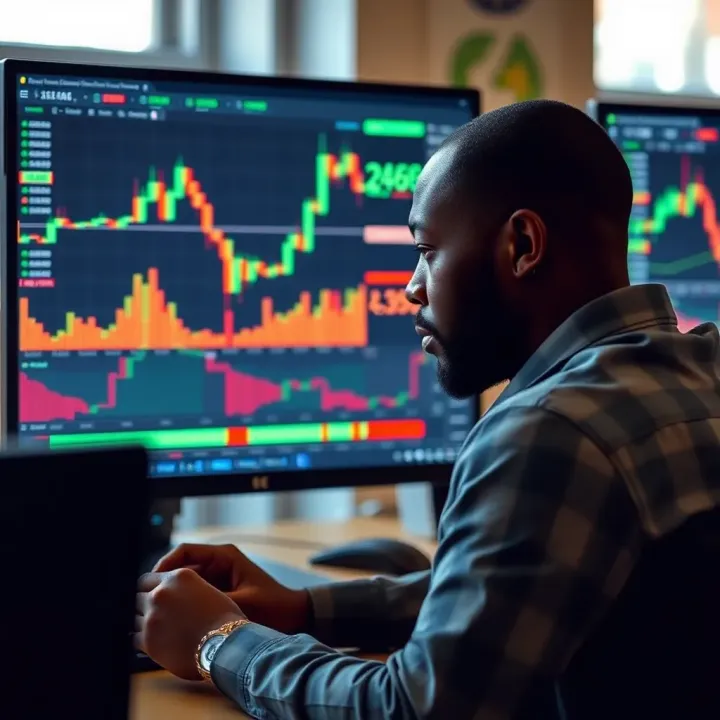
Start your forex journey right with demo accounts 🇿🇦. Practise trading safely, test strategies, and avoid common mistakes — all tailored for South African traders.
Learn how to manage your forex trading money effectively in South Africa 🇿🇦. Explore capital needs, risk control, funding, costs and local rules to trade confidently 💰
Based on 8 reviews